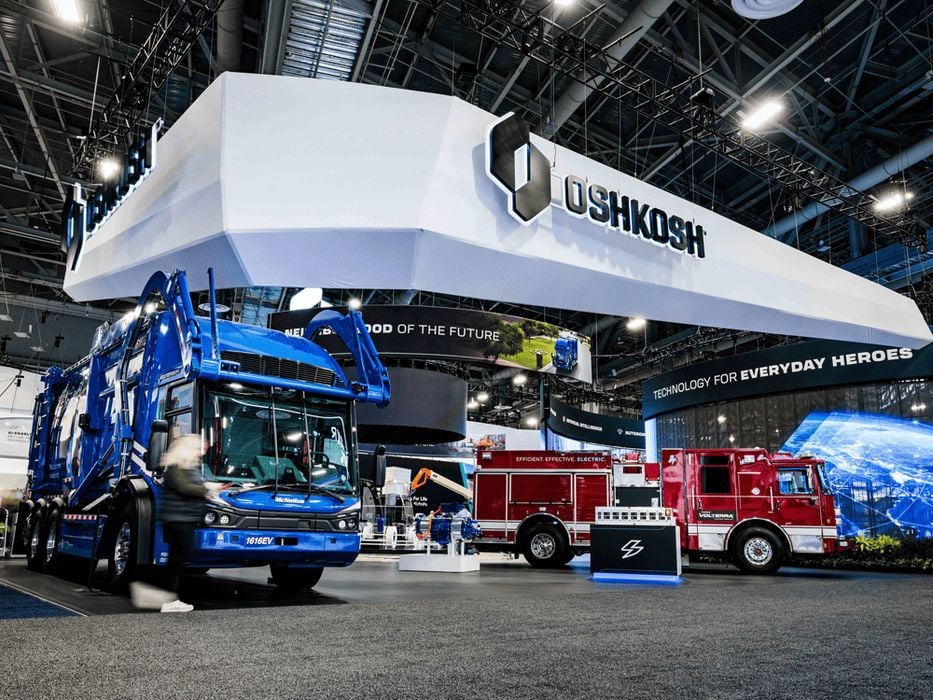
Oshkosh x SCADpro
Automotive HMI and Semiotics Research
"Scaling Agile Project Management Across Four Concurrent Teams"
This project is currently under confidentiality agreement. Details have been generalized to respect NDA requirements while demonstrating methodology and learnings.

Project Overview
My Role: Project Manager, Client Liaison, Main Author/Editor
Team: 20+ members across 4 concurrent teams
Timeline: 10 weeks
Context: SCADpro Fortune 500 partnership (currently under NDA)
The Challenge: Coordinate complex automotive interface research project across multiple specialized teams while maintaining client alignment and delivery quality for Oshkosh Corporation.
The Solution: Implemented agile methodology adapted for academic-industry collaboration, managing four concurrent research teams that reorganized into deliverable-focused teams during final two weeks.
The Impact: Successfully delivered 500+ pages of comprehensive documentation across two playbooks, maintained zero missed milestones, and served as prominent speaker during final client presentation to stakeholders.
Project Scope & Challenge
Coordinate complex automotive interface research project across multiple specialized teams while maintaining client alignment and delivery quality.
Project Structure
Four concurrent teams studying different vehicle types to gather insights, followed by reorganization into deliverable-focused teams during final two weeks.
My Responsibilities
- Client liaison - All correspondence and requirements gathering
- Project coordination - Stand-ups, check-ins, retrospectives
- Main author/editor - Semiotics theory playbook
- Team reorganization - Managed pivot to deliverable-focused structure
Deliverable Impact
Co-authored 500 pages across two comprehensive playbooks for Oshkosh to use in future automotive interface designs, with focus on semiotics theory application.
4
concurrent research teams coordinated
500
pages of documentation delivered
10
weeks from research to delivery
Multi-Team Coordination
Managed complex team structure that evolved from research-focused to deliverable-focused organization.
Research Team A
Vehicle Type 1
Research Team B
Vehicle Type 2
Research Team C
Vehicle Type 3
Synthesis Team
Insight compilation and documentation coordination
Coordination Methodology
Implemented agile practices adapted for academic-industry collaboration:
- Daily stand-ups with team leads across all four streams
- Weekly client sync meetings for requirement alignment
- Sprint retrospectives for continuous process improvement
- Cross-team collaboration ceremonies for insight sharing
Pivot Management
Successfully managed reorganization from research teams to deliverable-focused teams during final two weeks, maintaining momentum and quality.
Client Relations & Documentation
Enterprise Client Coordination
Served as primary liaison with Oshkosh stakeholders, managing all correspondence and translating requirements between academic teams and enterprise expectations.
Documentation Leadership
Co-author and editor for semiotics theory playbook, contributing to 500 pages of comprehensive documentation for future design applications.
Stakeholder Communication
Managed weekly progress reviews and bi-weekly business updates, ensuring alignment between academic deliverables and business objectives.
Quality Assurance
Established quality metrics and review processes to ensure deliverable standards met Fortune 500 enterprise expectations.
Project Management Process
Project Initiation & Team Setup
Established four research teams with specific vehicle specializations, set up communication protocols, and initiated client relationship management.
Research Coordination & Client Liaison
Managed daily standups, facilitated cross-team knowledge sharing, and maintained regular client communication with requirement clarifications.
Team Reorganization & Pivot
Successfully restructured teams from research-focused to deliverable-focused during final two weeks while maintaining project momentum.
Documentation & Delivery
Led creation of comprehensive playbooks totaling 500 pages, with co-authorship of semiotics theory documentation for client future use.
Project Impact & Outcomes
Delivery Excellence
Successfully delivered integrated solution on time with zero missed milestones across all four concurrent work streams, demonstrating effective portfolio-level project management.
Documentation Impact
Co-authored comprehensive playbooks totaling 500 pages that provide Oshkosh with reusable frameworks for future automotive interface design projects.
Client Relationship Success
Maintained strong stakeholder relationships throughout the engagement, translating between academic capabilities and enterprise requirements effectively.
Presentation Leadership
Served as prominent speaker during final client presentation, delivering the presentation finale to Oshkosh stakeholders and synthesizing project outcomes across all four teams.
Team Leadership
Demonstrated ability to coordinate complex, multi-team initiatives while adapting organizational structure mid-project to optimize delivery outcomes.
Key Learnings
Agile Methodology at Scale
Learned to adapt agile practices for academic-industry collaboration, managing portfolio-level coordination across multiple concurrent teams while maintaining delivery quality and timeline adherence.
Enterprise Client Relations
Developed skills in Fortune 500 stakeholder management, learning to translate between academic timelines and enterprise expectations while maintaining professional communication standards.
Organizational Adaptability
Successfully managed mid-project team reorganization, demonstrating that flexible project structure can optimize outcomes when managed with clear communication and stakeholder alignment.