Nightclub Experience Design
Circe's Menagerie
CAD, Rendering, Design (Solo Project)
Nightclub Design, Modeling and Rendering Project
10 weeks
Sketchup, Rhino, Enscape, Illustrator
Project Overview
Circe's Menagerie transforms the ancient Greek myth of Circe—the sorceress who turned men into beasts—into an immersive nightclub experience where opulence meets danger. Guests step into Circe's island mansion to drink her famous elixirs, dance under moving constellations, and explore her mysterious collections... all while discovering the dark truth behind her legendary hospitality.This fully-modeled concept demonstrates how mythological storytelling can create a nightclub experience that's equal parts enchanting and unsettling—where every design element reinforces the question: will you escape, or become part of the menagerie?
Key Achievements
Designed
7
distinct interconnected spaces across nightclub layout
Merged
Hellenistic Revival
architecture with modern nightclub operations
Created
photoreal
environmental renderings
Developed cohesive narrative through environmental details
The Challenge
The Brief: Design, model, and render an immersive nightclub experience given a floor plan.
My Approach
I chose Circe's myth because it offered something nightclubs need but fairy tales rarely provide: willing danger. Guests want to be seduced. They want to taste the forbidden. The myth gave me permission to create a space that's beautiful and dangerous—where the threat of transformation becomes part of the allure.
Creative Constraints
- Balance ancient Greek architectural authenticity with modern nightclub functionality
- Create narrative cohesion across 7+ distinct spaces
- Design for multiple guest experiences: drinking, dining, dancing, lounging
- Maintain mystery without confusion (environmental storytelling over exposition)
The Creative Challenge
How do you translate 'you might be turned into a beast' into a nightclub guests actually want to visit?
The answer: make the danger elegant. Make the warning signs gorgeous. Give guests just enough narrative clues to feel like they're in on the secret—like they're clever enough to outsmart Circe and escape unscathed.
Concept Development
From Myth to Nightclub
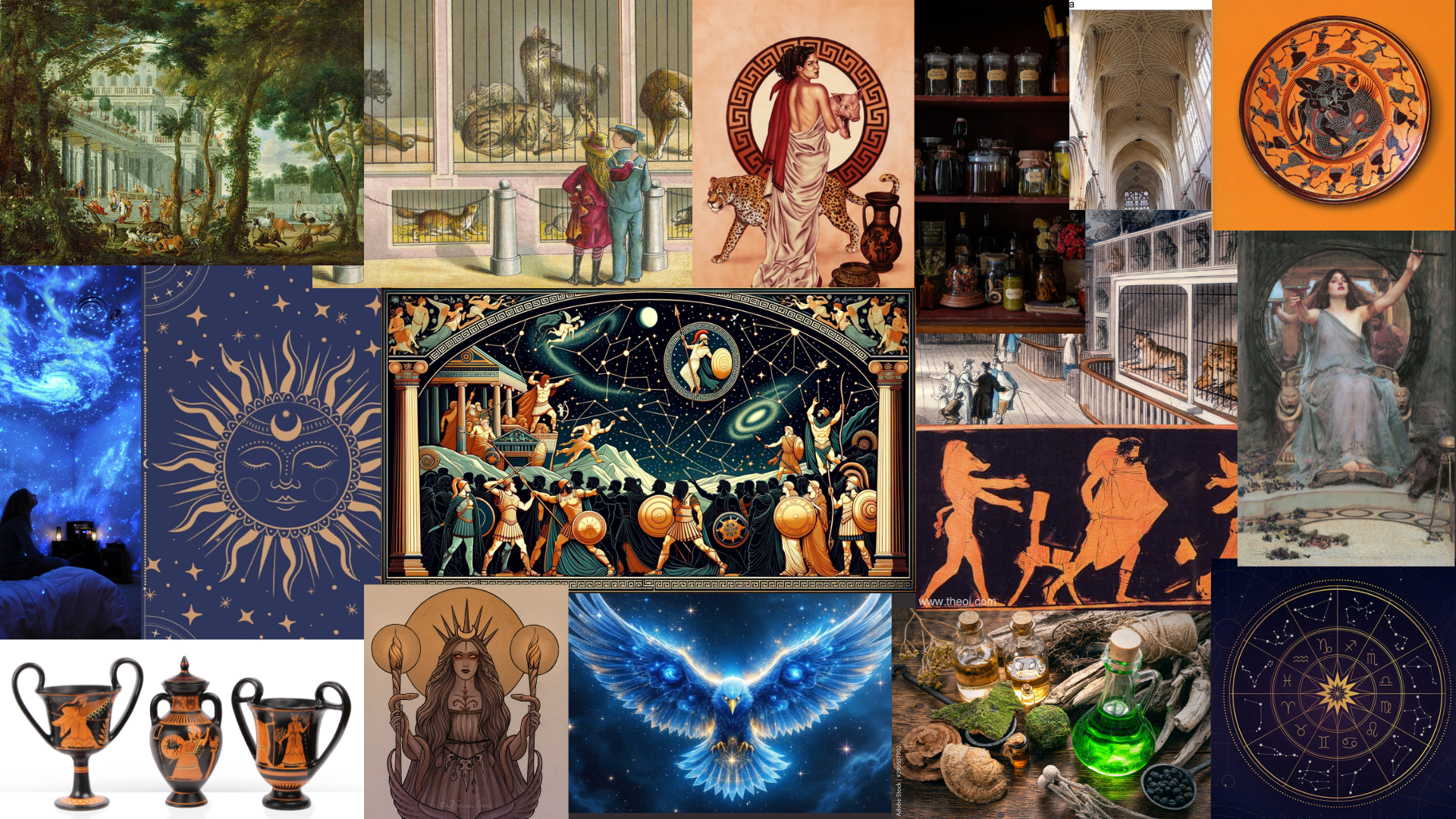
In Homer's Odyssey, Circe lures travelers to her island with promises of rest and feasting—then transforms them into swine. I kept the seduction, updated the setting, and made the transformation metaphorical. The nightclub becomes Circe's mansion. The cocktails become her elixirs. The caged animals throughout the space carry nameplates—hints that these creatures weren't always beasts. Guests who drink too much, stay too late, lose themselves to the music... they're becoming part of the collection.
Lighting as a Psychological Tool
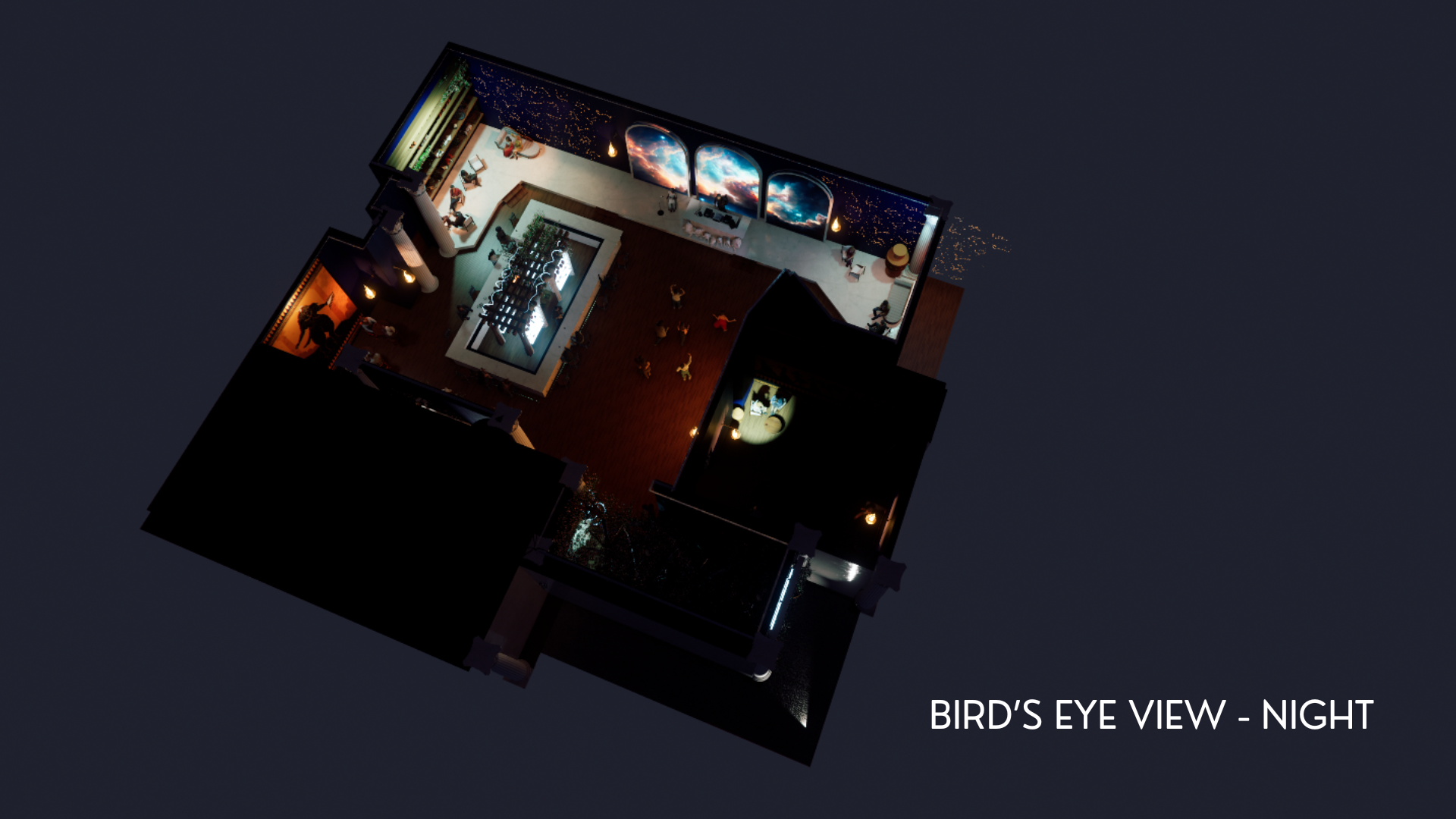
Drawing on my psychology background, I designed lighting to shape guest behavior and emotional states. Intimate spaces—the Corner Lounge, Backstage Lounge, VIP areas—feature warm firelight from torches and sconces. Fire creates a primal sense of safety and gathering; it slows people down, encourages face-to-face conversation, and makes spaces feel human-scale even in grand architecture.
In contrast, spaces touched by Circe's magic glow with frost-blue neon—the Apothecary Bar's backlit shelving, the celestial projections, the mystical symbols. This cold, otherworldly light signals transformation, danger, and the supernatural. It's beautiful but unsettling. Guests instinctively know: this is where the magic happens.
The interplay between warm firelight (safety, intimacy, humanity) and cold neon (magic, danger, transformation) creates emotional push-pull throughout the experience.
Design Philosophy
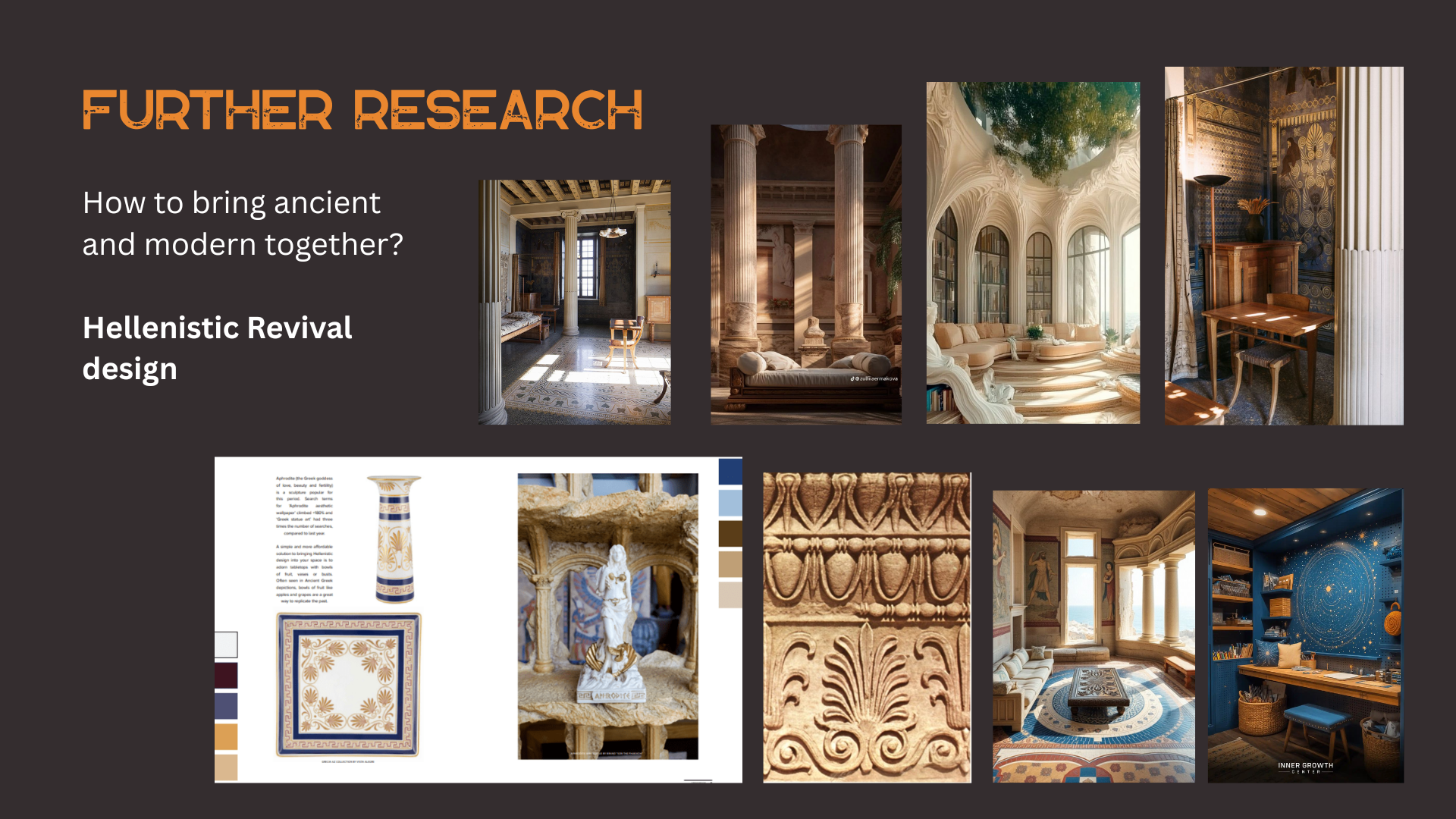
I merged ancient Greek architectural elements (Corinthian columns, pergolas, marble, geometric patterns) with modern materials and technology (projection mapping, interactive game tables, contemporary lighting). The result feels like a place that's existed for centuries—because in the story, it has.
Experience Design
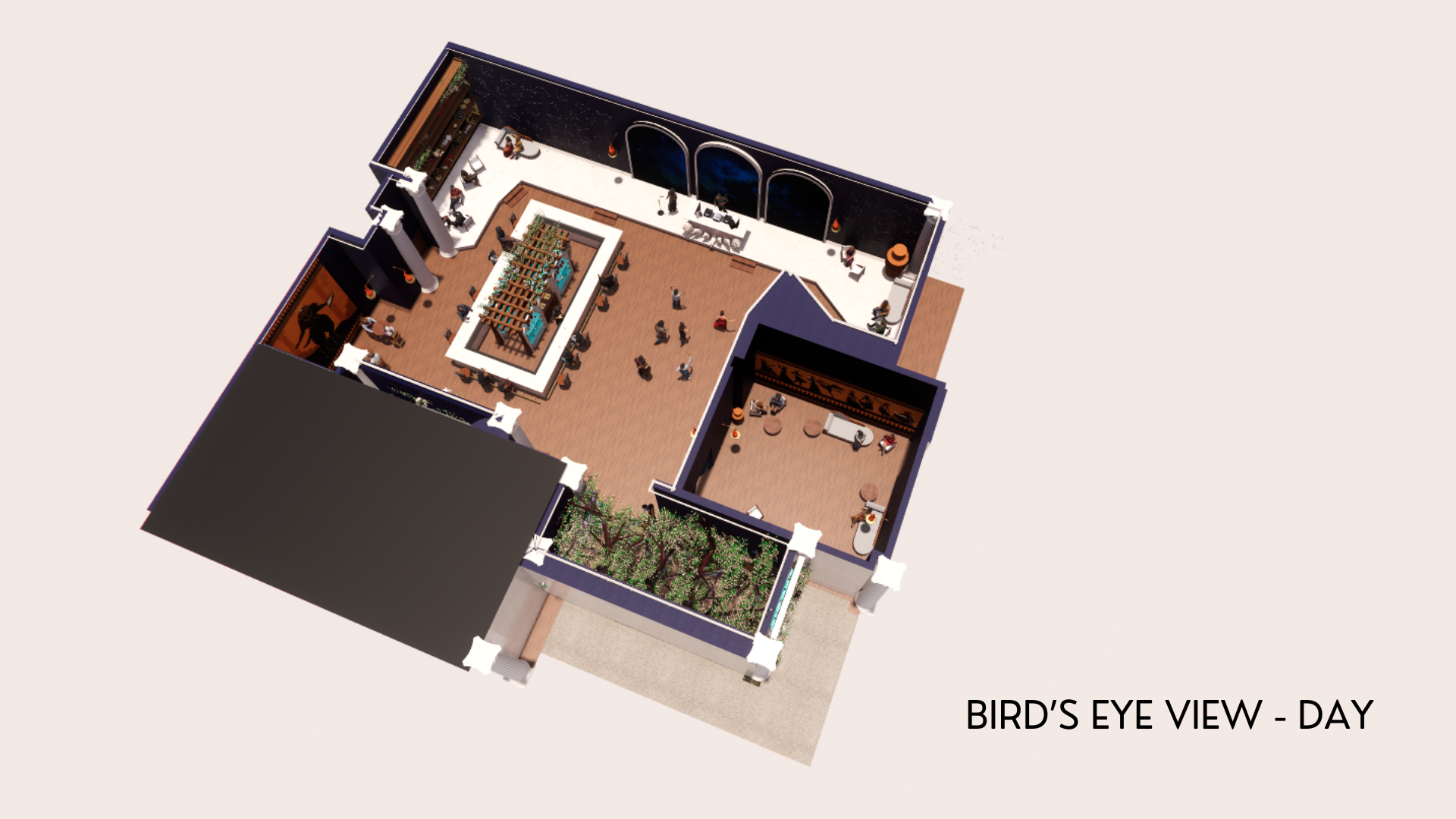
The Journey through Circe's Mansion
The experience is designed as a progressive revelation—guests discover the danger slowly, moving from awe to curiosity to unease.
.png)
.png)
Each space serves both a functional nightclub purpose AND advances the narrative:
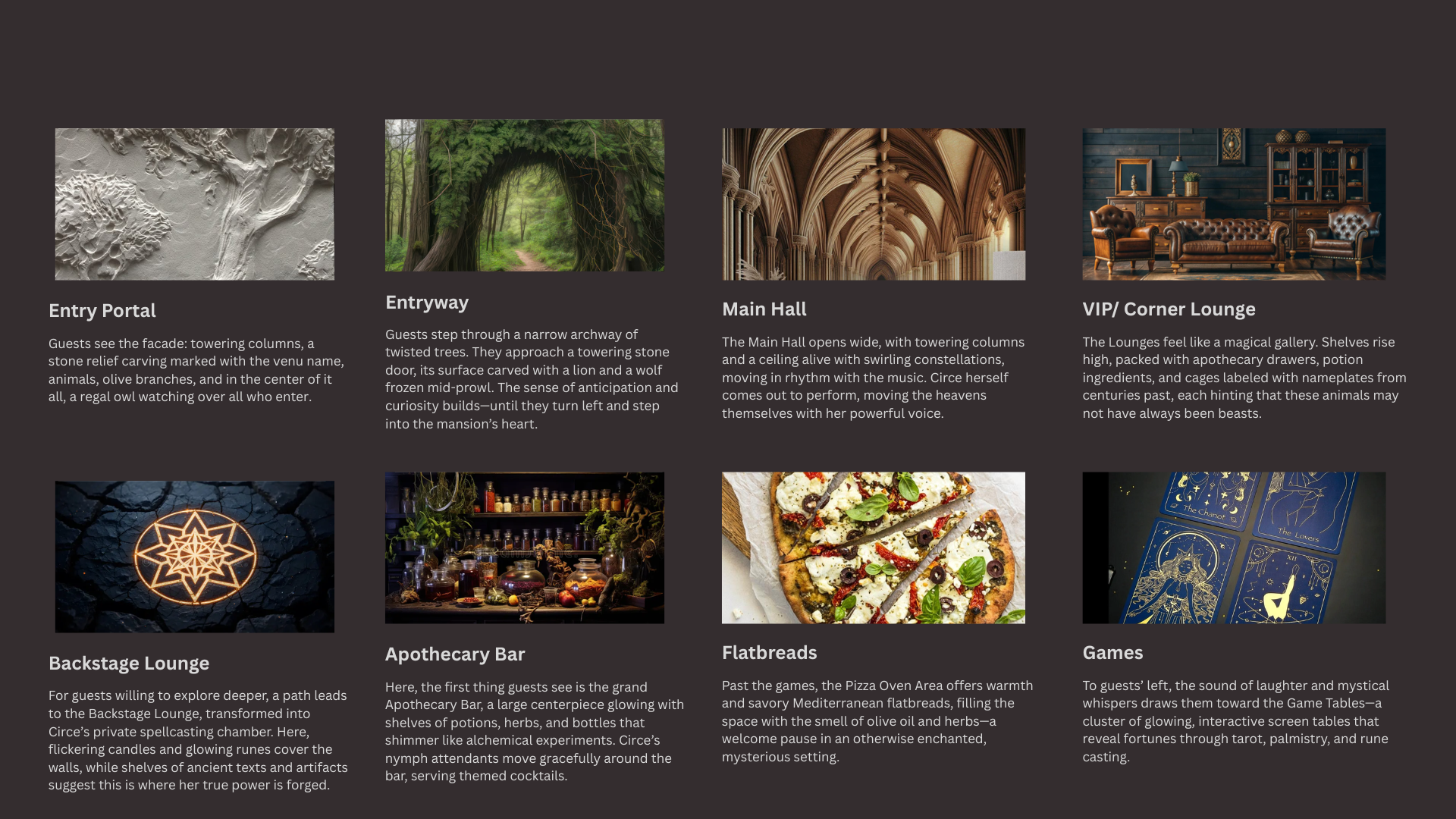
1. Entry Portal — First impression sets expectations
2. Entryway — Transition from outside world to mythic space
3. Main Hall — Central gathering with live performance and celestial ceiling
4. Apothecary Bar — The Icon—signature cocktails served by 'nymph' bartenders
5. VIP Lounge — Exclusive space with hanging cages and lush greenery
6. Corner Lounge — Apothecary shelving reveals the menagerie
7. Backstage Lounge — Circe's sanctum—where the magic happens
8. Food Window — Mediterranean flatbreads provide grounding
9. DJ Booth/Stage — Elevated performance space with cosmic imagery
Key Spaces
Facade/Entry Portal
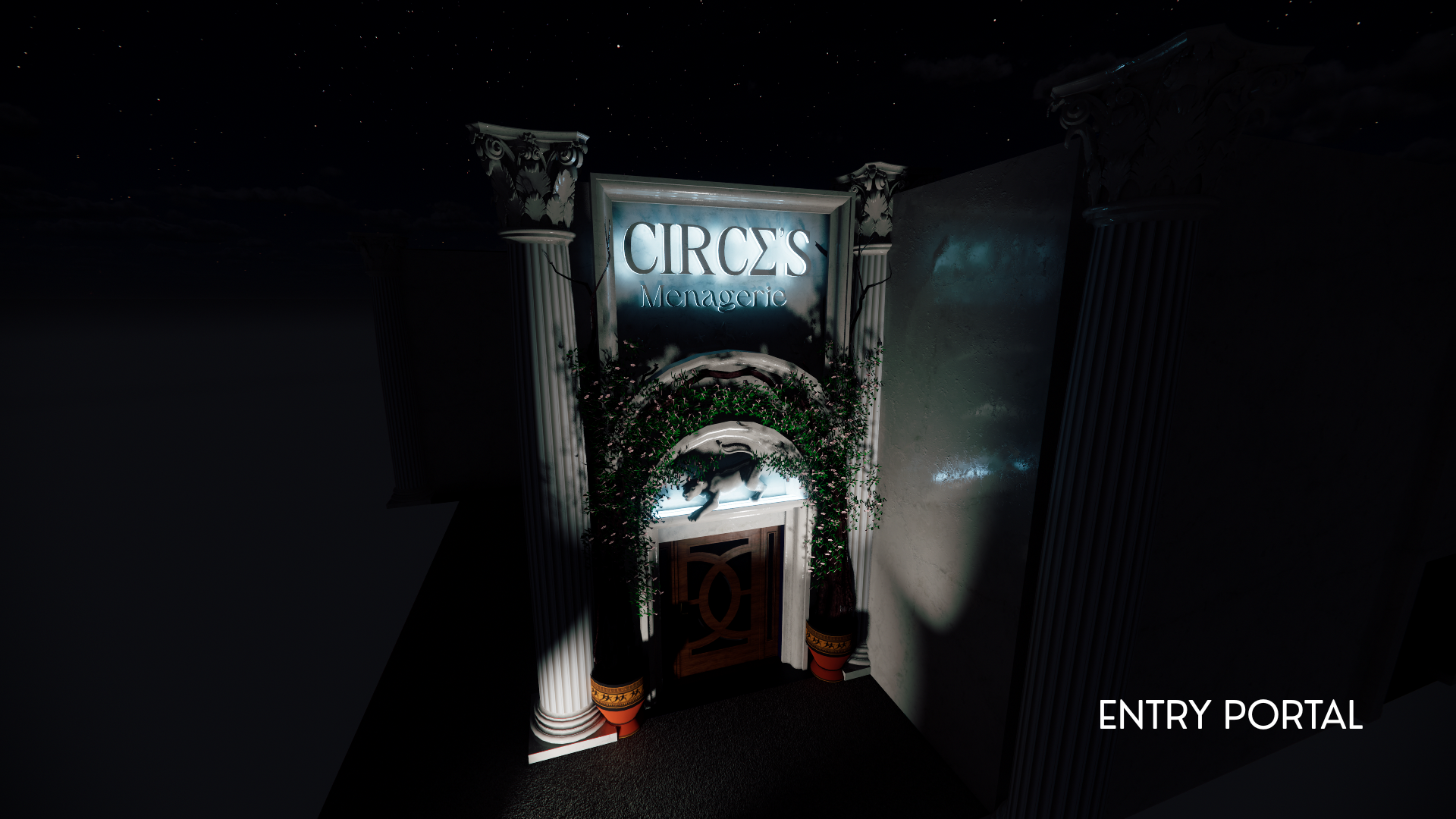
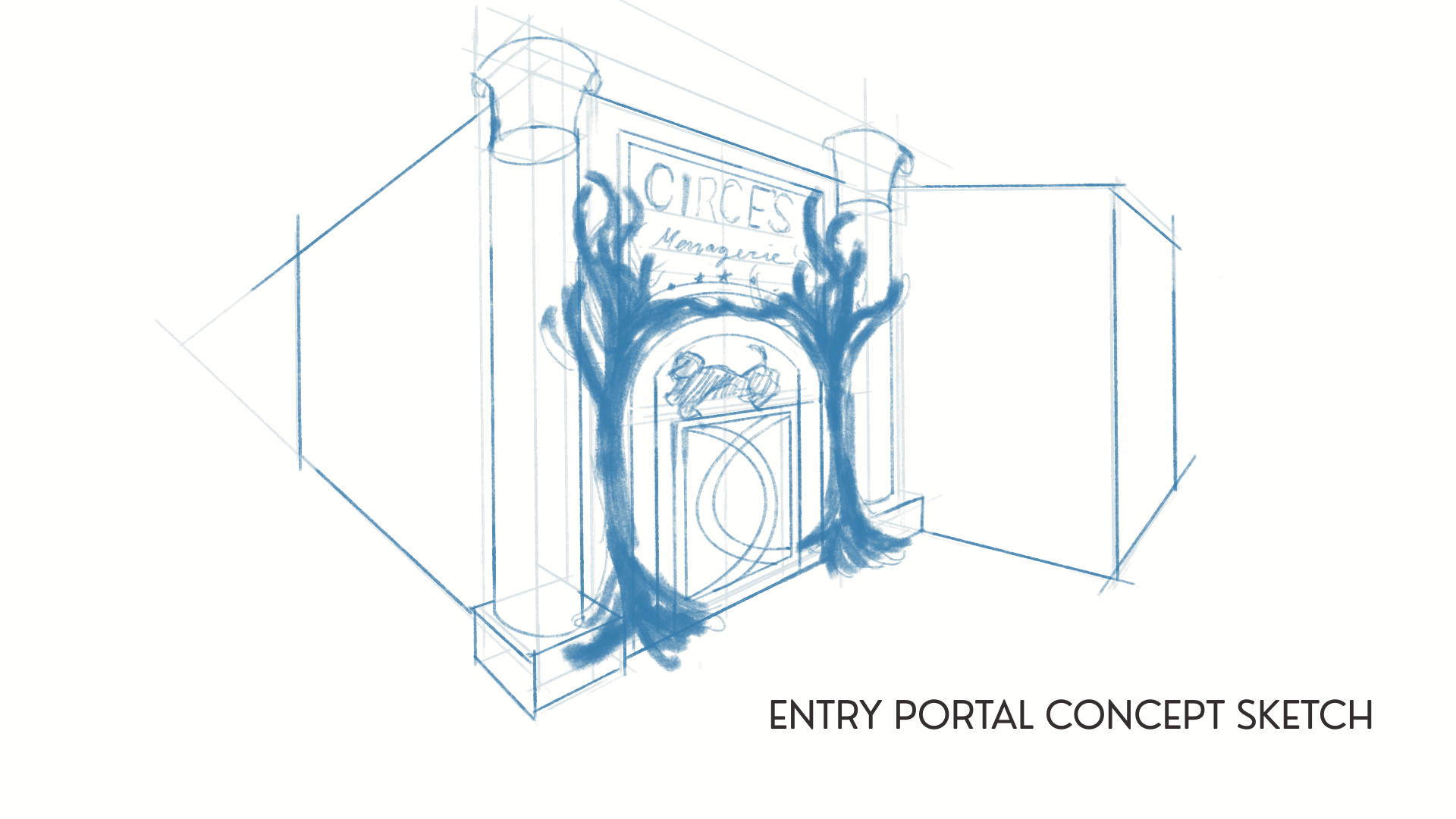
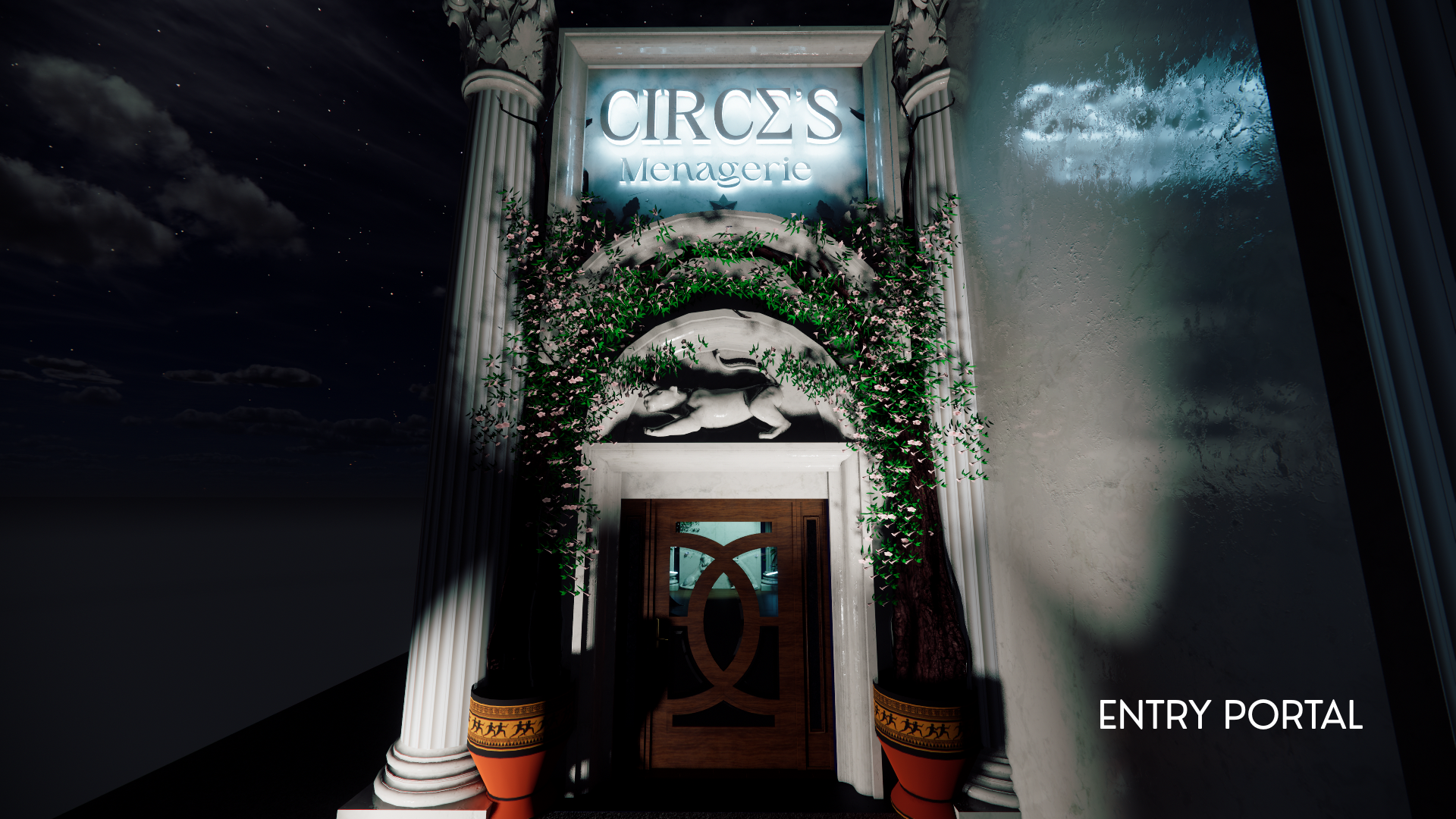
The facade establishes the visual language: towering Corinthian columns frame a stone relief carved with leaves, stars, and a panther mid-prowl. Flanked by two large trees, intertwining with the stone, the interplay between old and new, organic and inorganic, becomes cemented in guests' minds as they pass under a frost-blue backlit sign reading "Circe's Menagerie".
Entryway
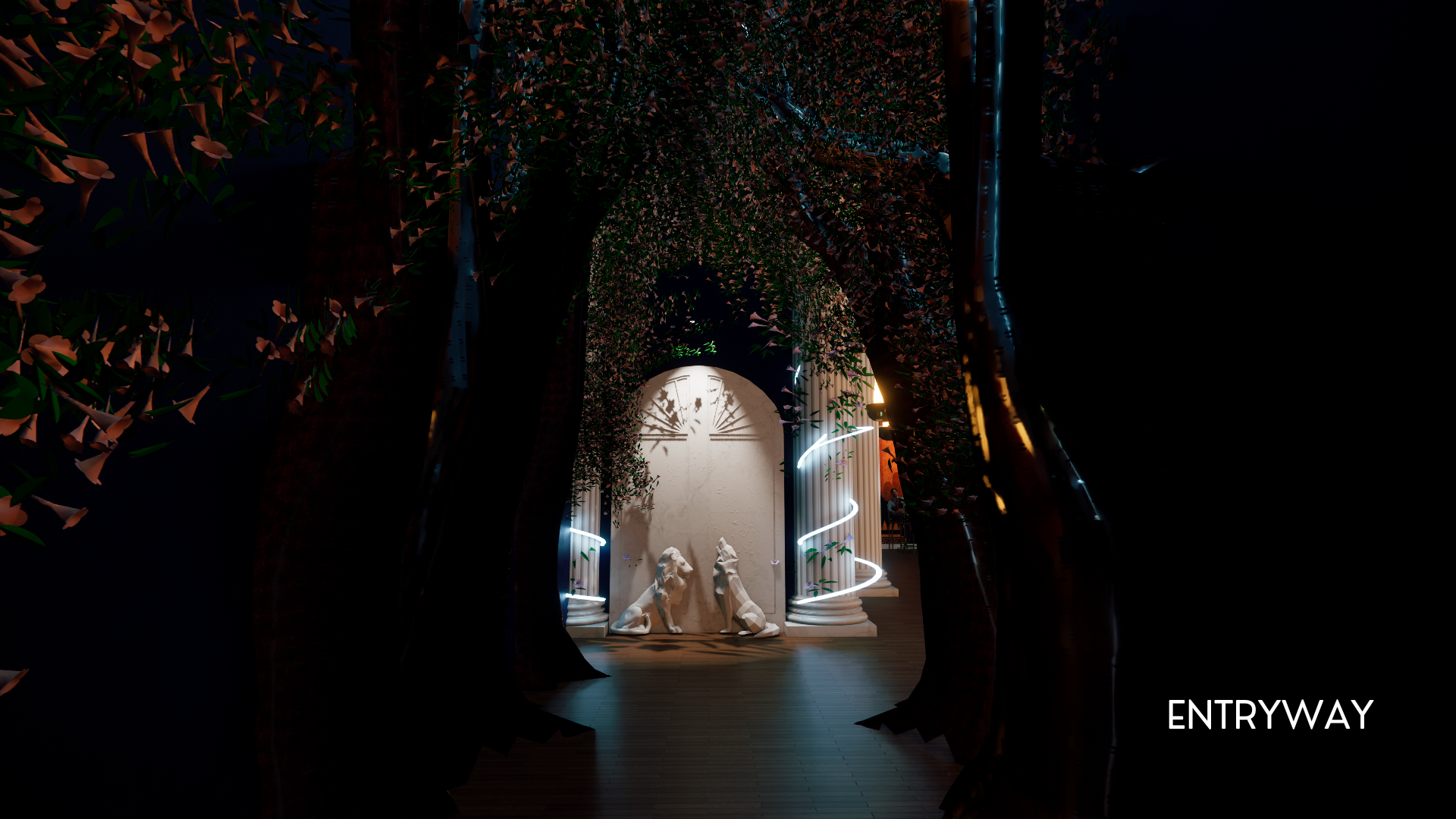
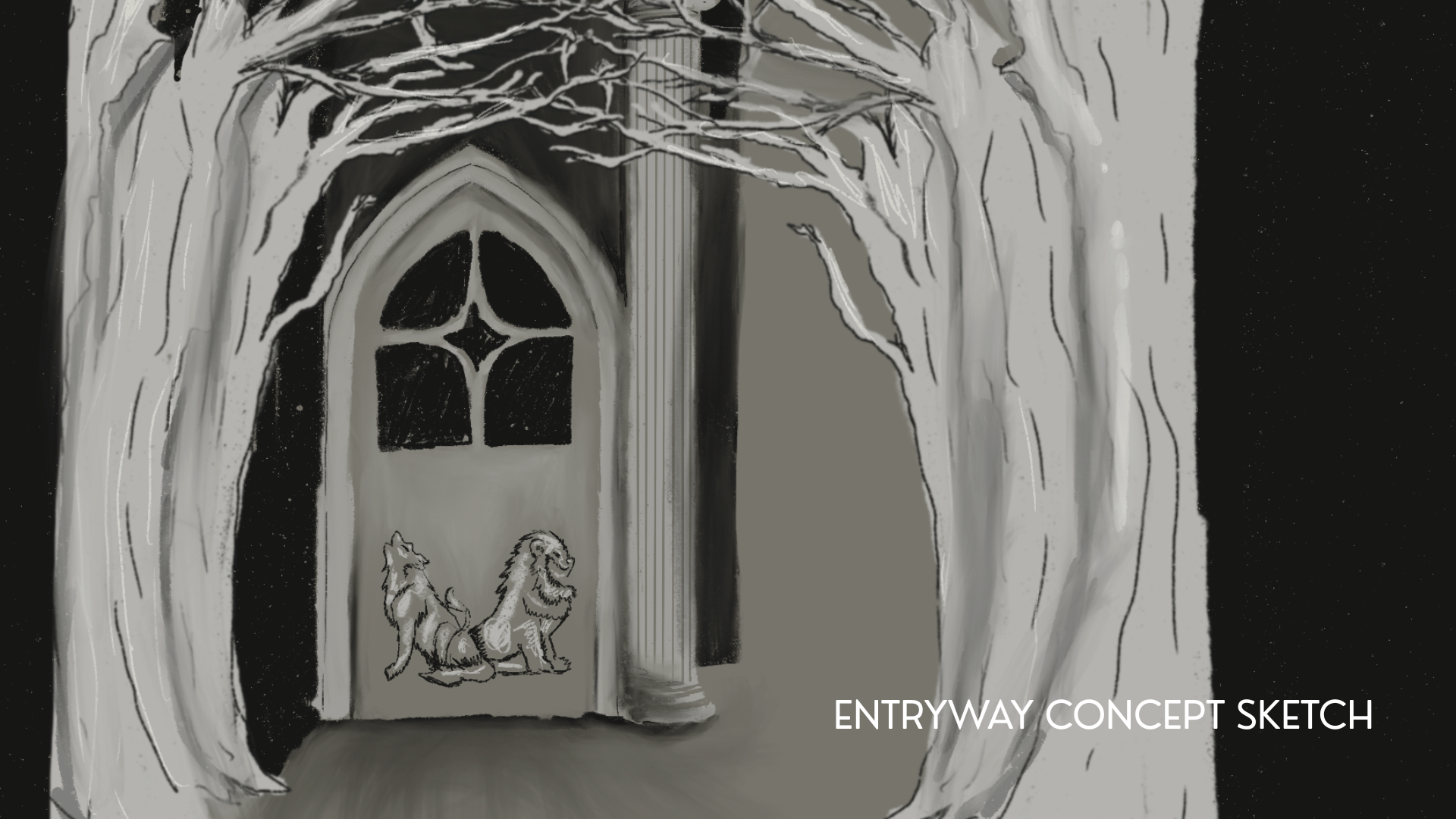
Guests pass through a forest archway—twisted branches form a natural threshold separating the mundane world from Circe's domain. The carved door features a lion and wolf frozen mid-prowl, foreshadowing the transformation theme. This transitional space builds anticipation. The path narrows. The ceiling lowers. Then guests turn left and the Main Hall explodes open—a classic reveal sequence borrowed from theme park design.
Practical tree/branch elements creating organic tunnel
- Sculpted relief door (lion and wolf)
- Dramatic lighting through branches
- Narrowing path creates compression before expansion
Apothecary Bar
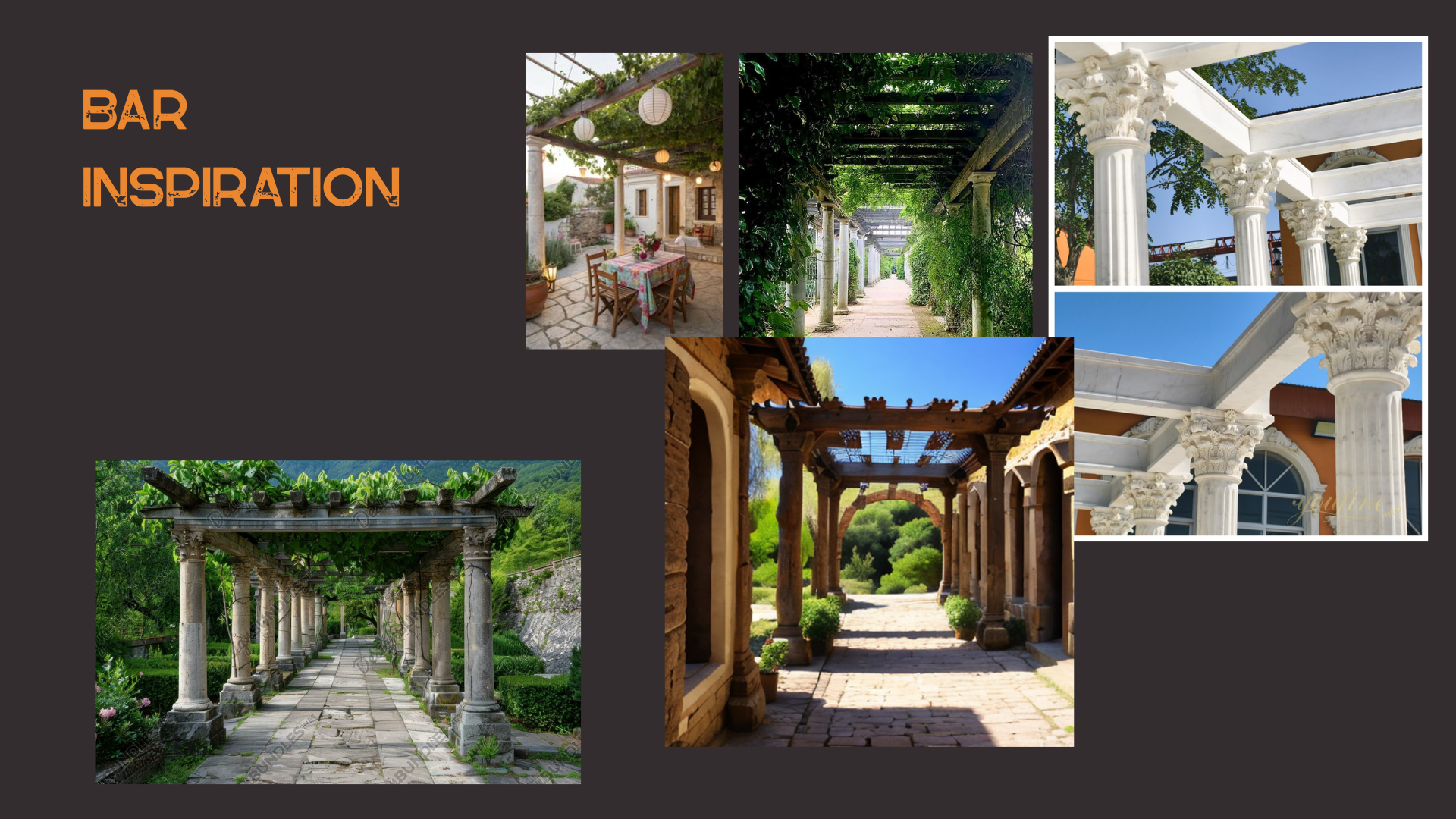
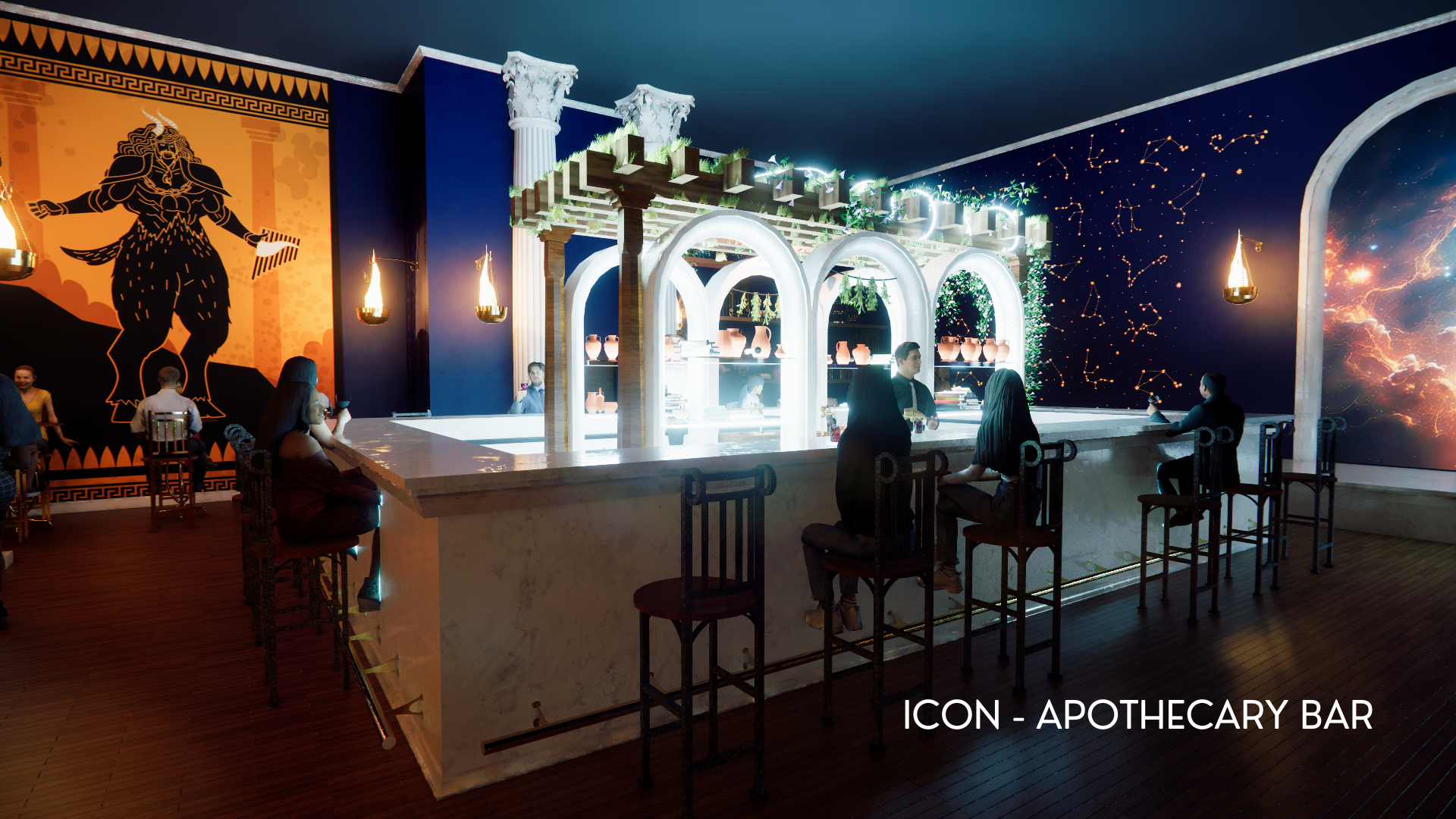
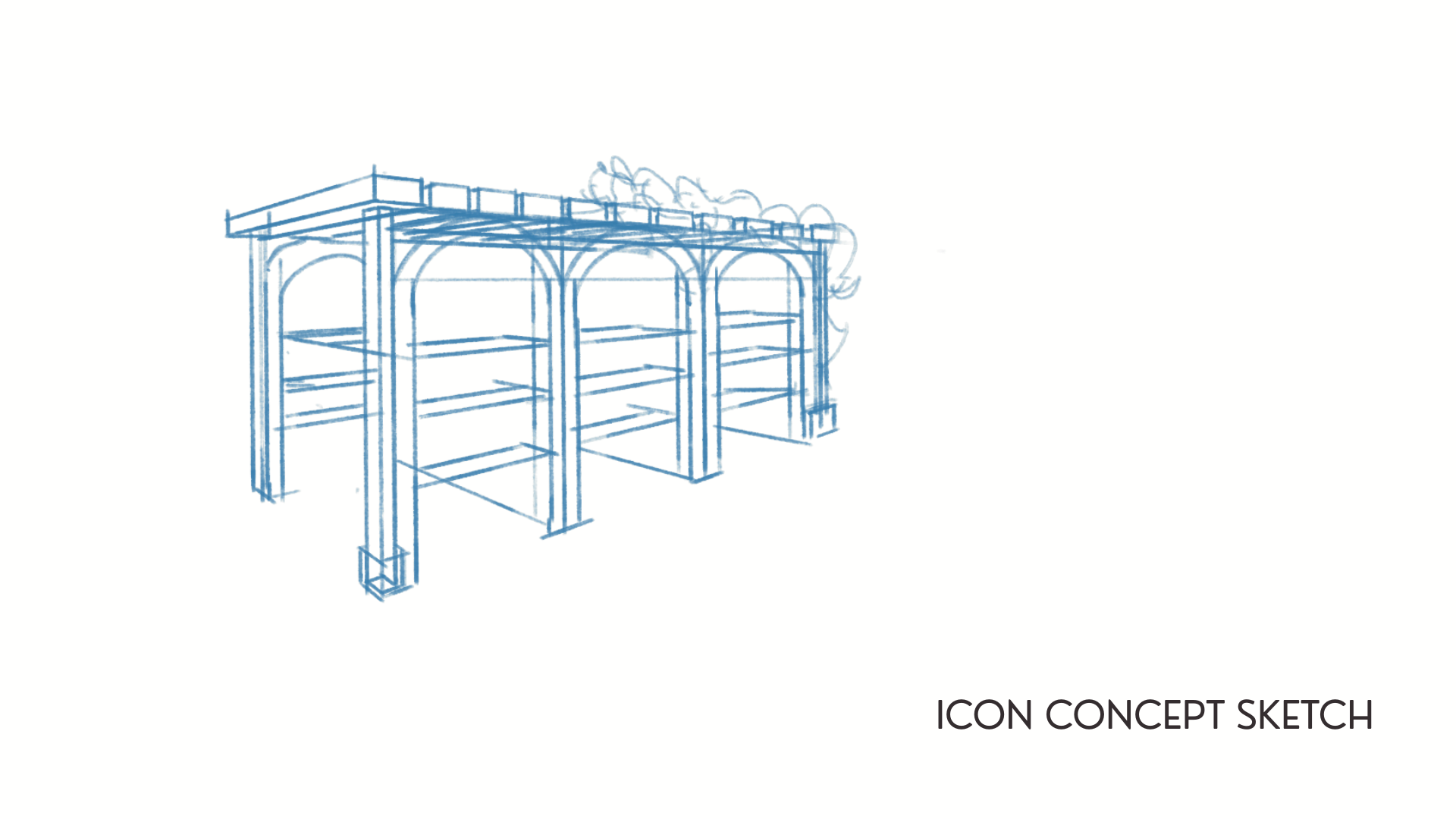
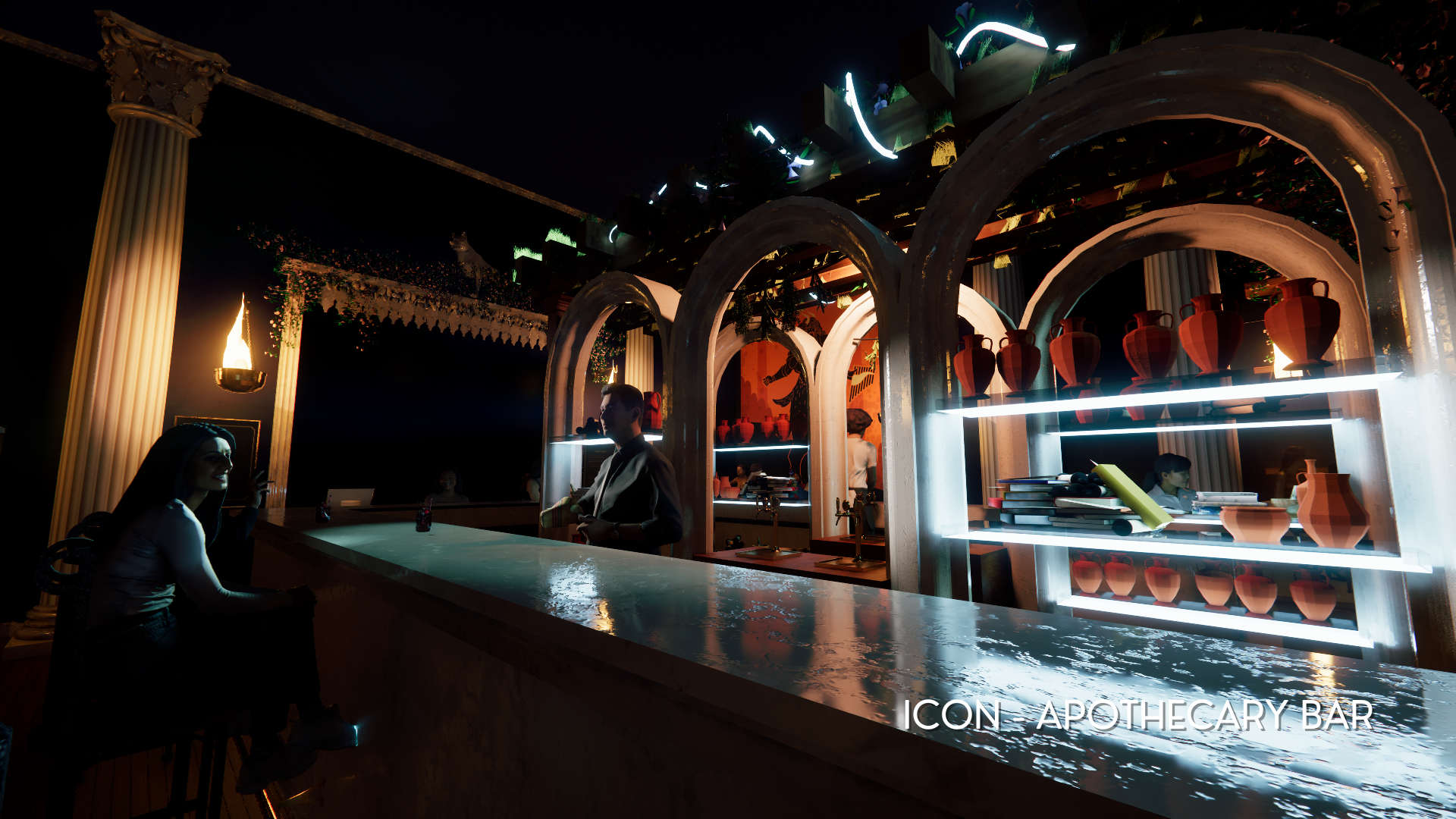
The Apothecary Bar is the experience's signature element—the space that defines Circe's Menagerie visually and narratively.A pergola structure topped with cascading greenery and terracotta planters creates a living canopy. Beneath it, three arched niches glow with backlit shelving displaying bottles, jars, and potion ingredients like a magical pharmacy. The marble bar curves to encourage social gathering while nymph-costumed bartenders prepare 'elixirs'—themed cocktails with names like 'Circe's Kiss' or 'The Transformation.'
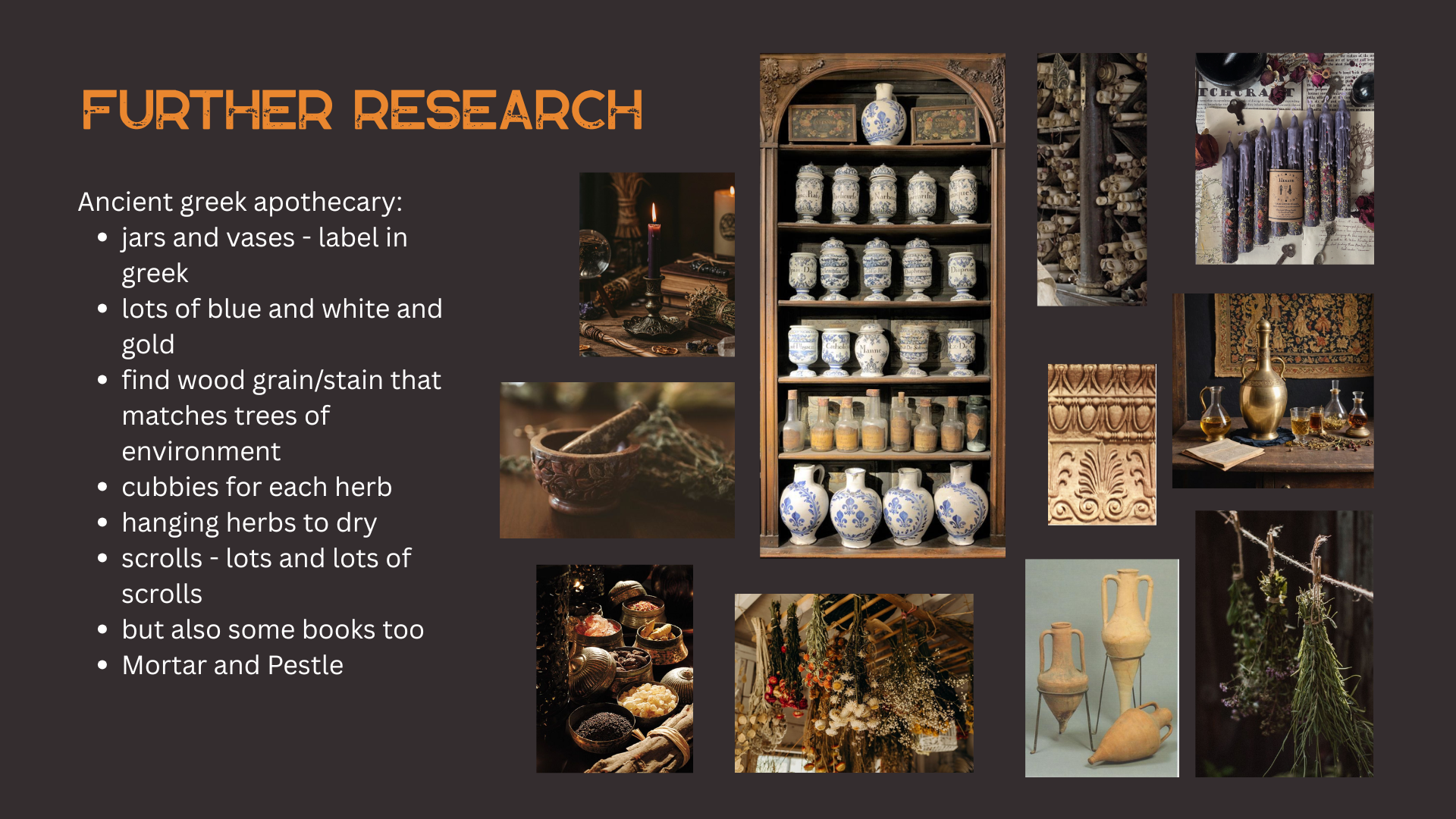
The back bar shelving uses ancient Greek apothecary logic: labeled jars (in Greek), hanging herbs, mortars and pestles, compartmentalized storage. But the ingredients aren't medicine—they're stagecraft. The glowing bottles. The mysterious powders. The whole bar says: These drinks will change you.
Wooden pergola with geometric patterns
- Marble arches supporting structure
- Terraced greenery (reminiscent of the hanging gardens of Aeaea)
- Terracotta amphorae and Greek pottery as decorative elements
DJ Booth & Main Hall
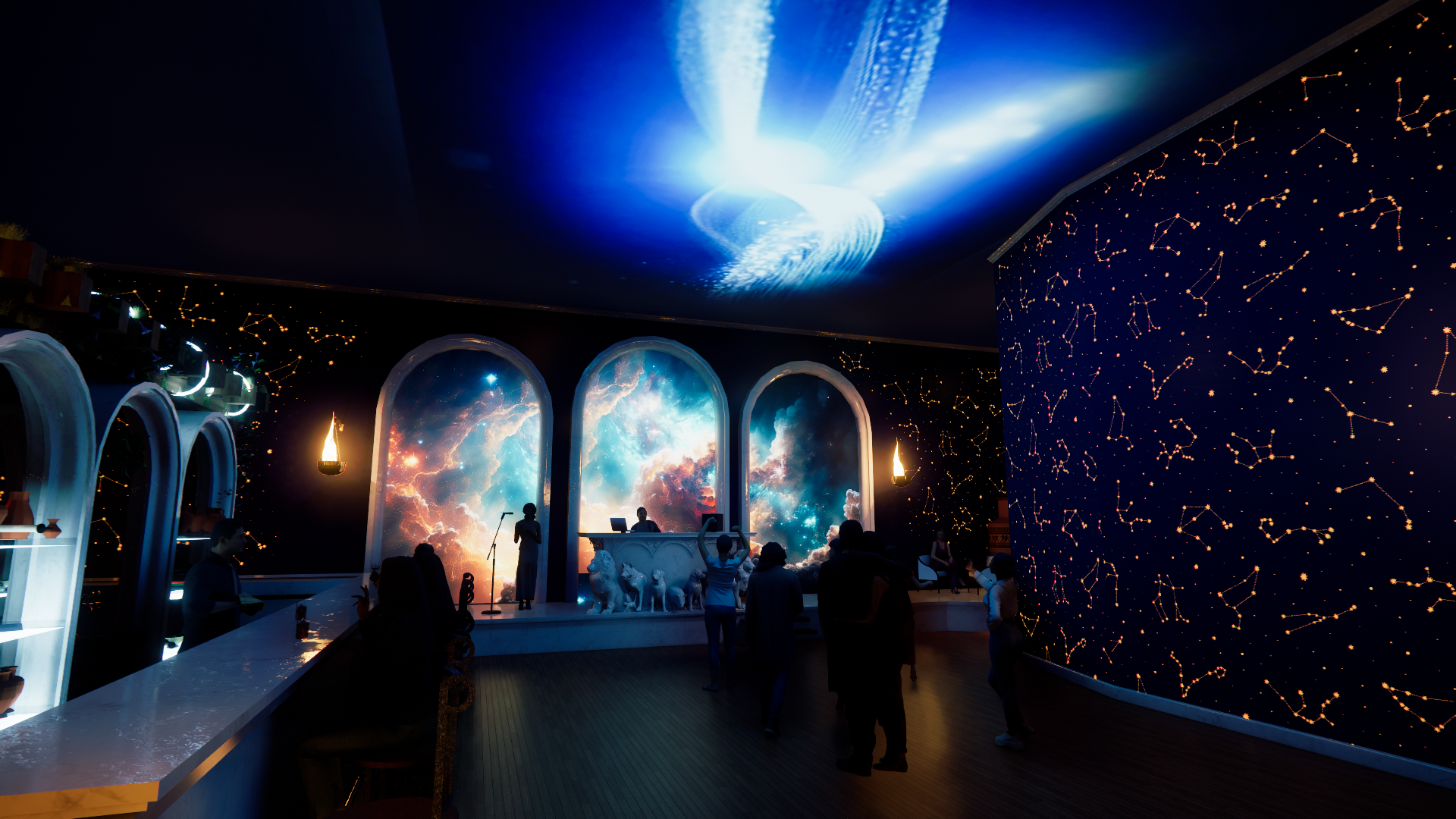
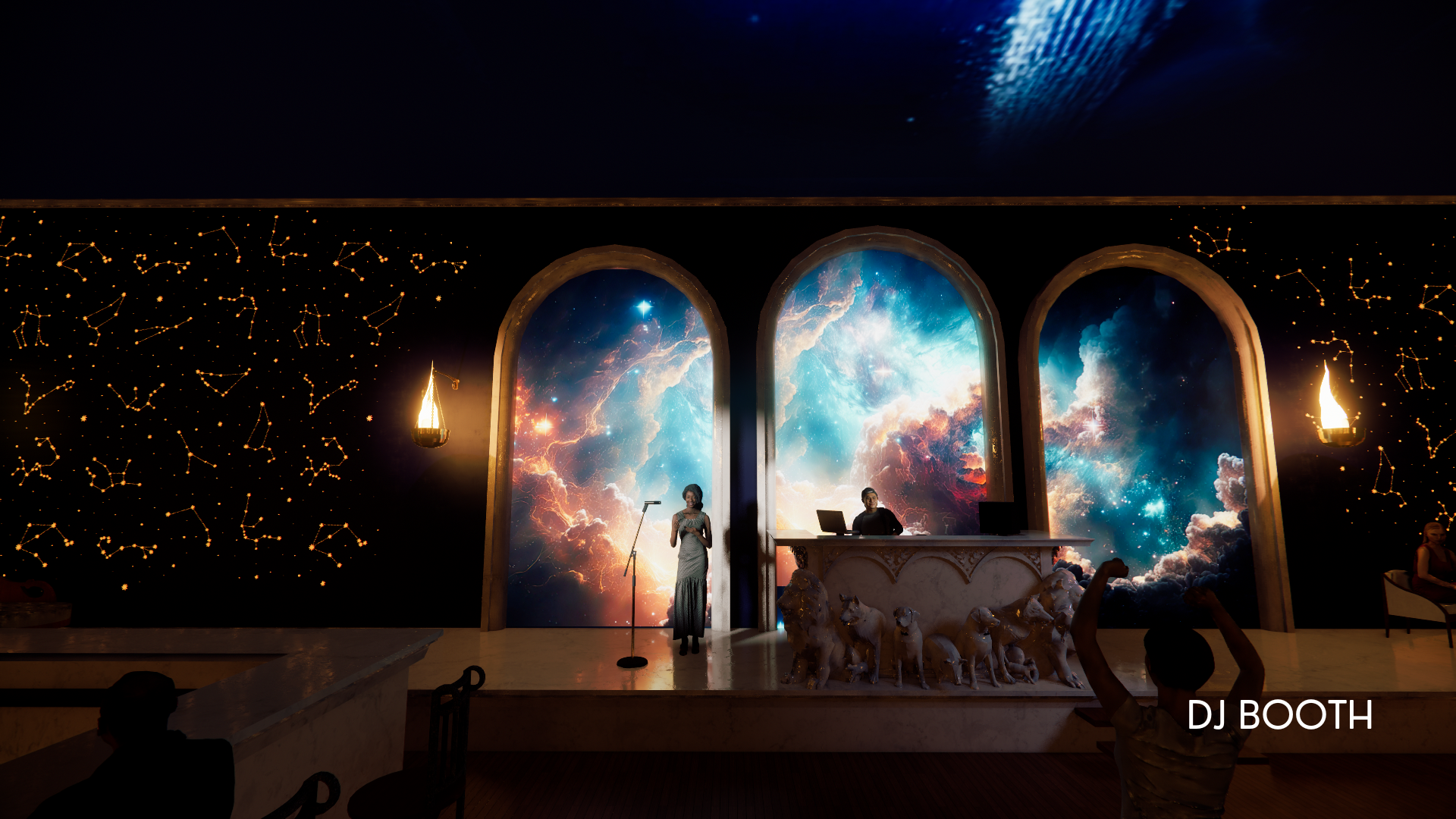
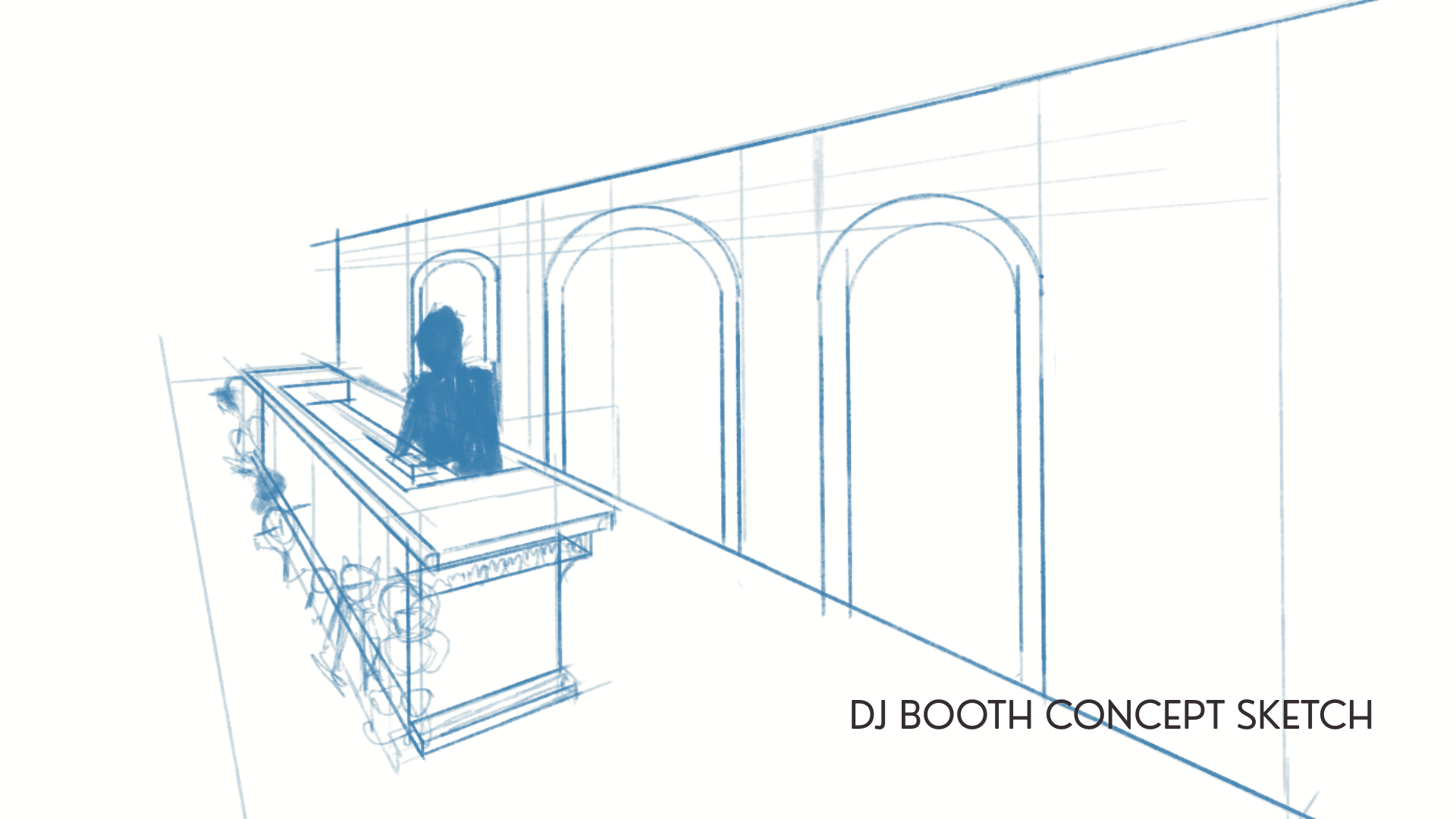
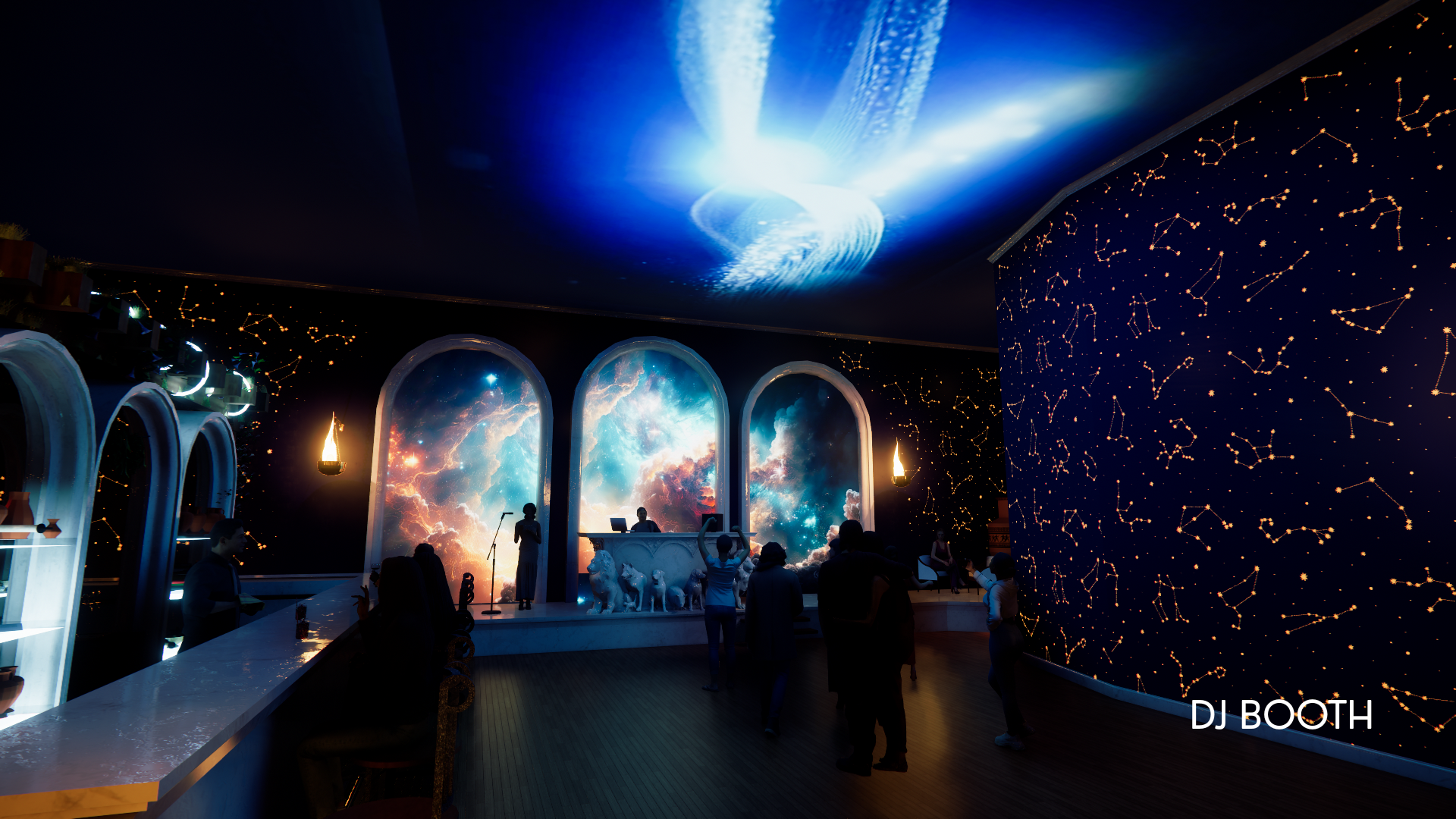
The DJ booth elevates Circe as the literal center of attention—she 'moves the heavens with her voice.' The booth sits on an elevated platform with ornate relief paneling (transforming animals), while the backdrop features three arched screens displaying shifting nebulae and constellations.
The ceiling becomes a canvas for projection mapping—constellations that move in rhythm with the music. This is Circe's power made visible: she controls the celestial sphere itself.
The juxtaposition of ancient relief sculpture with cosmic digital projections creates the Hellenistic Revival aesthetic that defines the space—old and new, myth and technology, in constant dialogue.
Elevated platform with sculpted animal reliefs
- Three arched projection screens (nebulae, galaxies, constellations)
- Microphone for live performance (Circe character appearances)
- Constellation ceiling projection mapping responsive to music
- DJ equipment integrated into classical aesthetic
Food Window
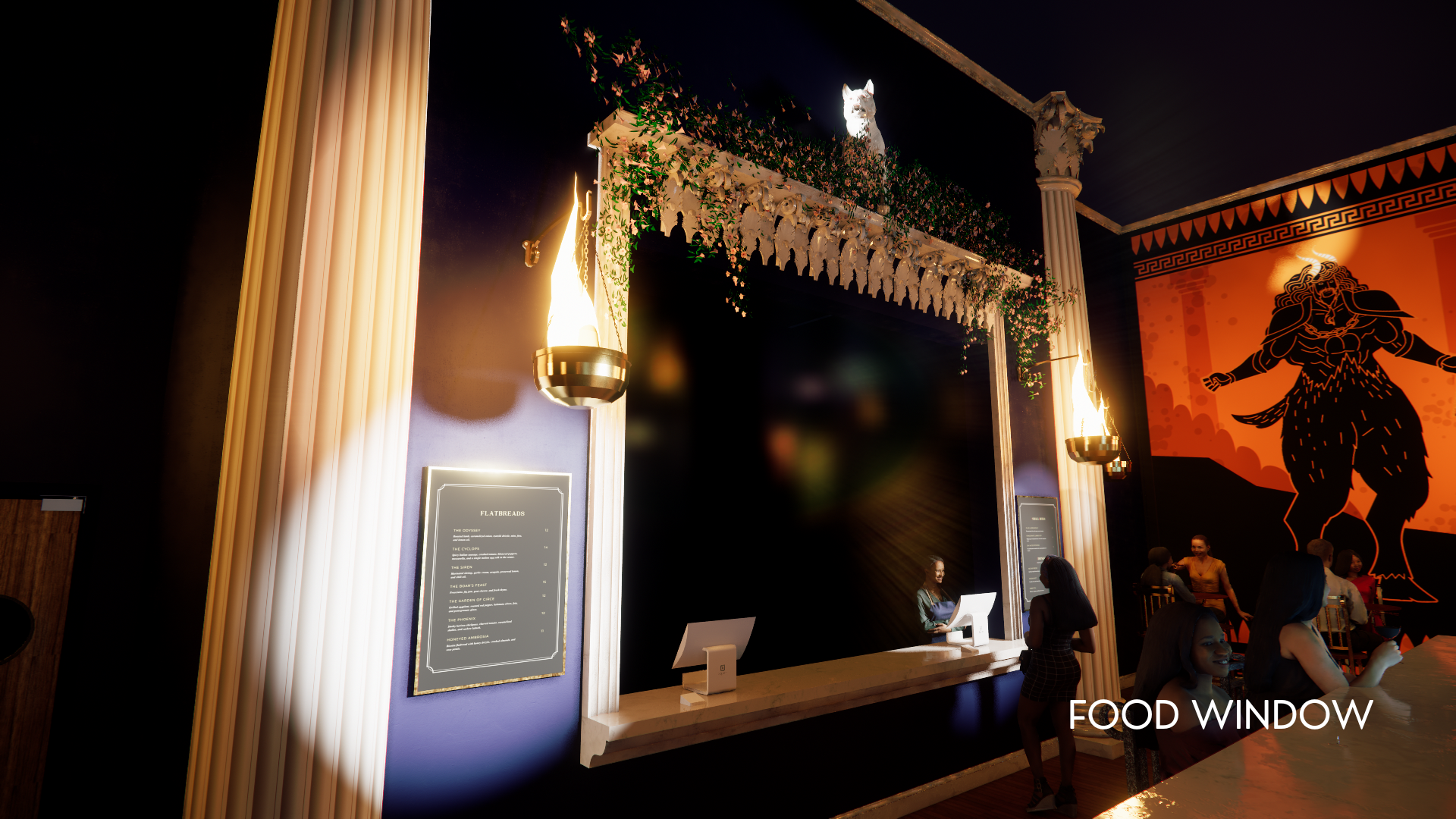
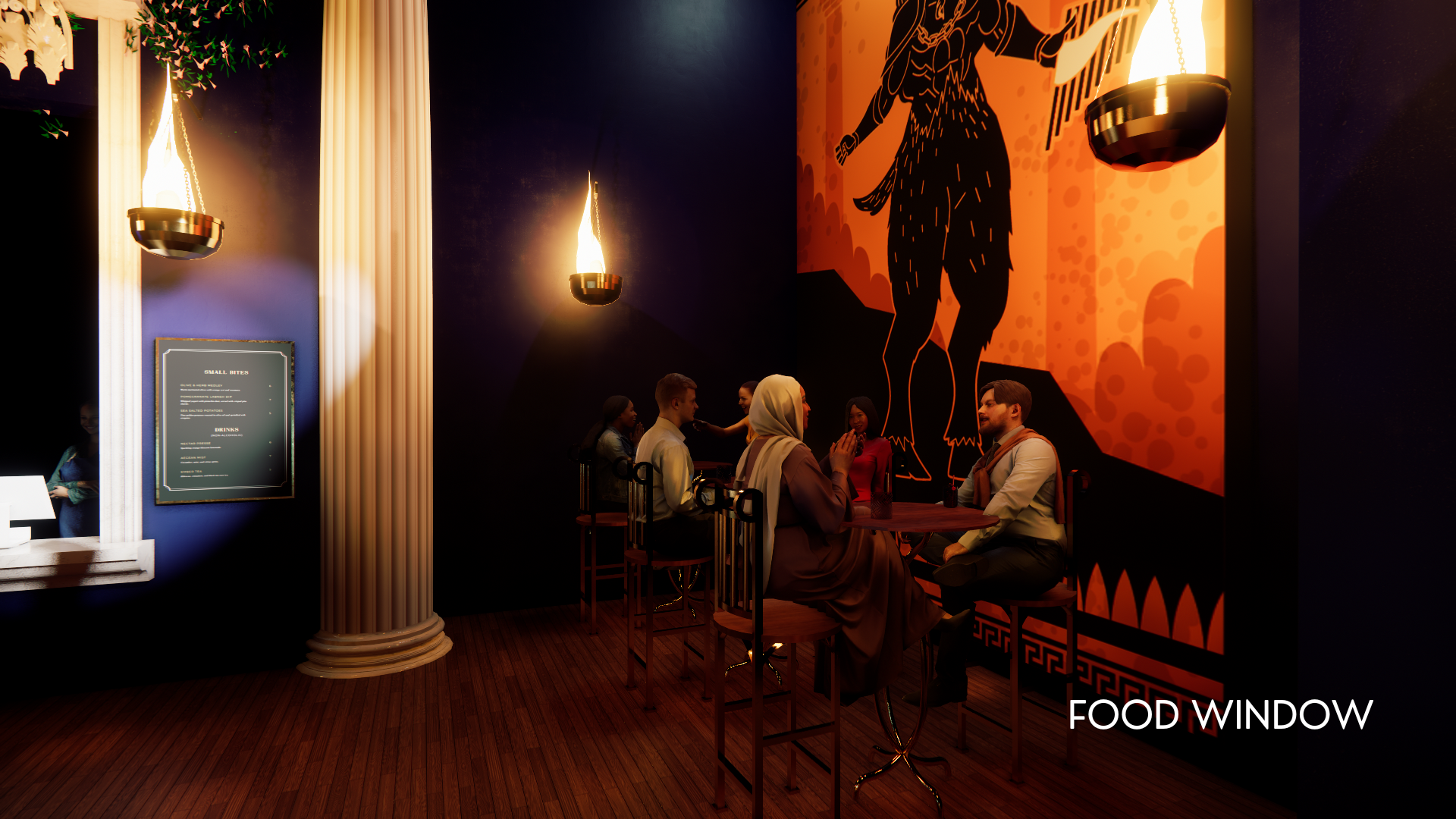
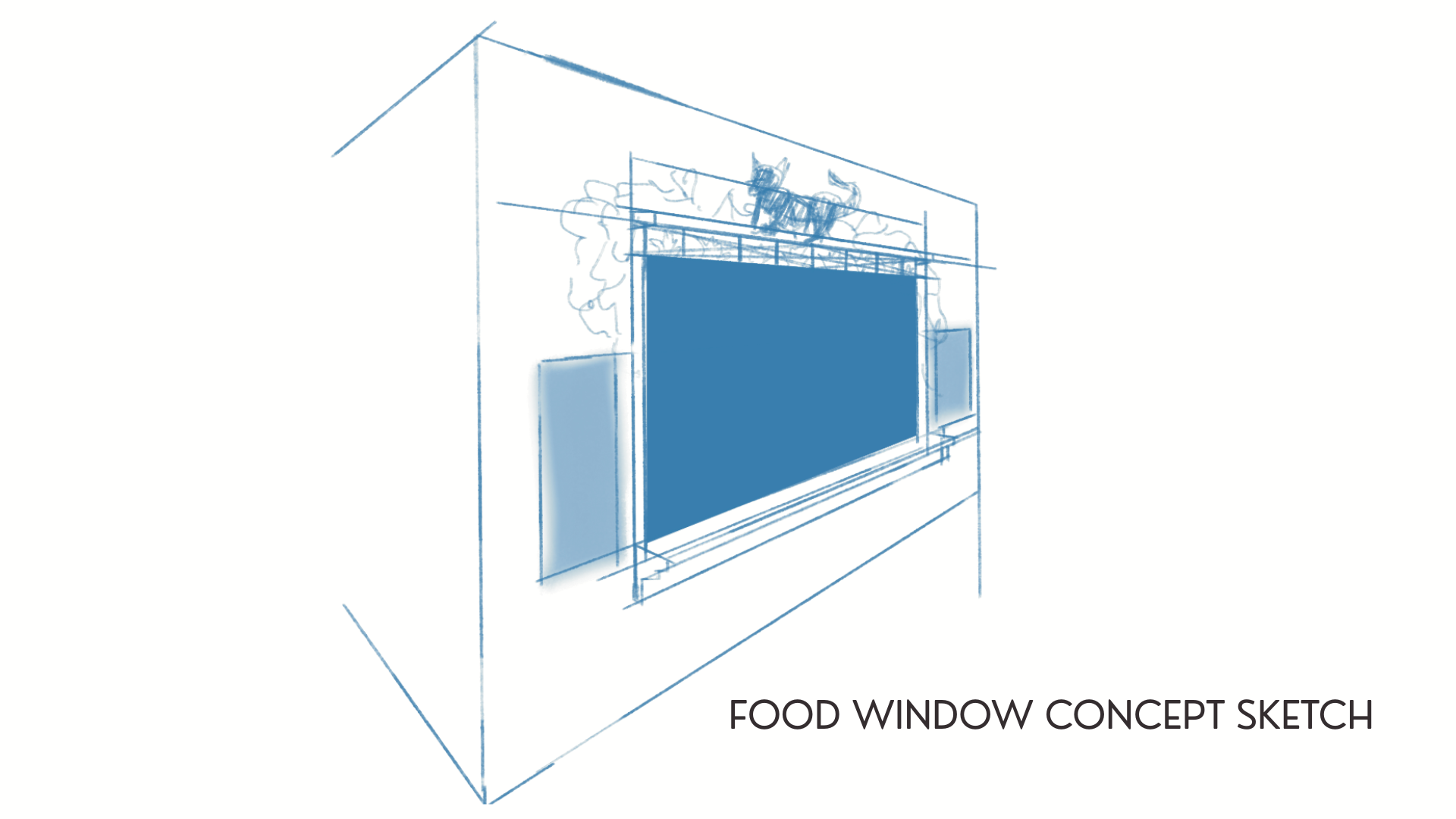
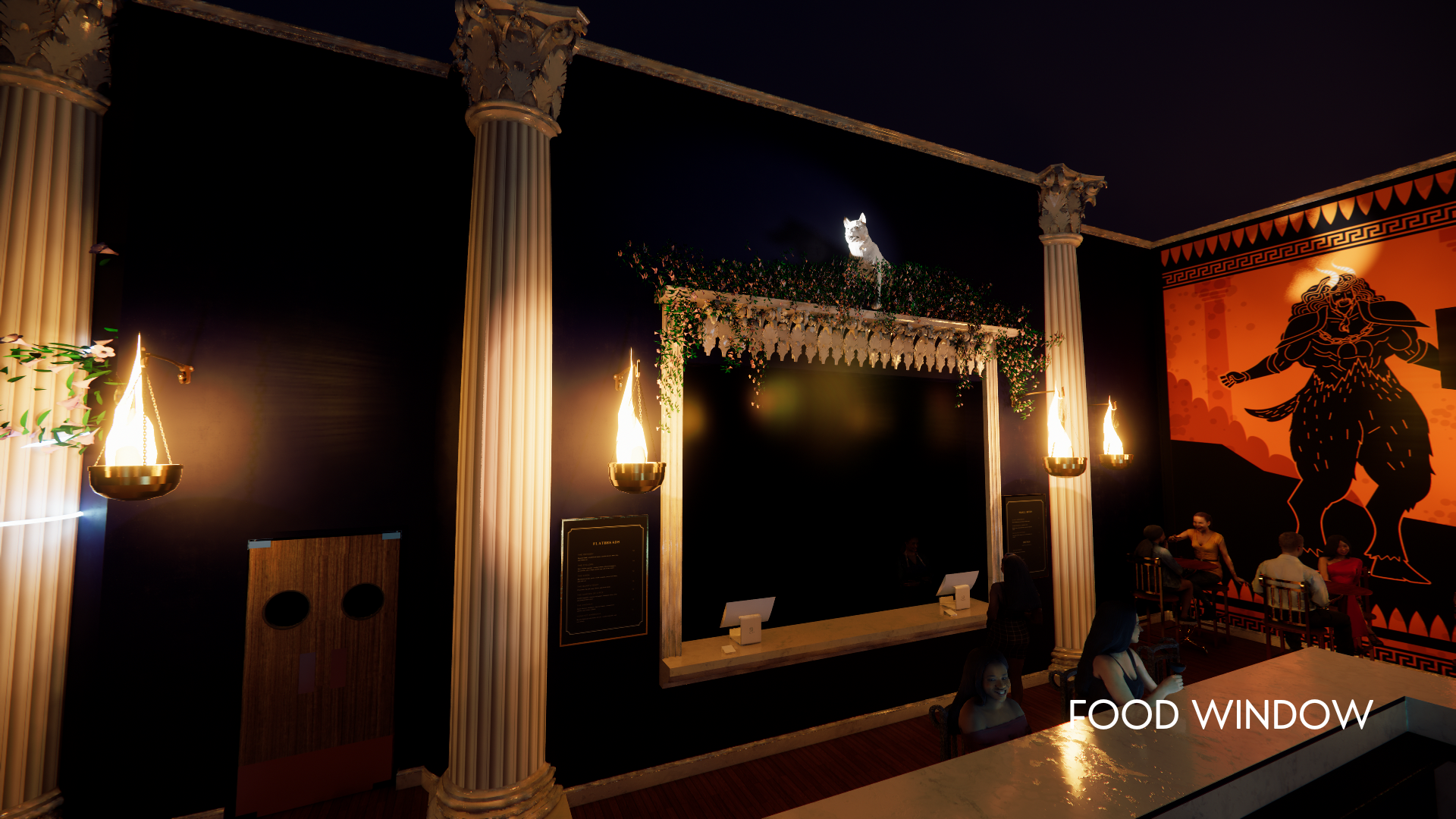
Even mythical sorceresses need to serve food. The Pizza Window offers Mediterranean flatbreads through a classical service counter—but it's designed as Circe's kitchen garden.
A relief crowned with an animal sculpture (wolf or boar) frames the window. Flames from braziers flank the opening. Greek key patterns and painted figure silhouettes (orange on dark blue) decorate the walls—visual callbacks to ancient Greek pottery.
The menu board is styled as an ancient tablet. The smells of olive oil, herbs, and wood-fired dough ground the experience in something tangible—important in a space so focused on illusion and transformation.
Flanking torch sconces (practical fire effects)
- Integrated menu board designed as ancient tablet
- Visible greenery (herbs) connecting to apothecary theme
VIP Lounge
Flanking torch sconces (practical fire effects)
- Hanging greenery and bronze cages from wooden beams overhead
- Murals depicting women of Greek Mythology - stories and people Circe would like to depict in her home
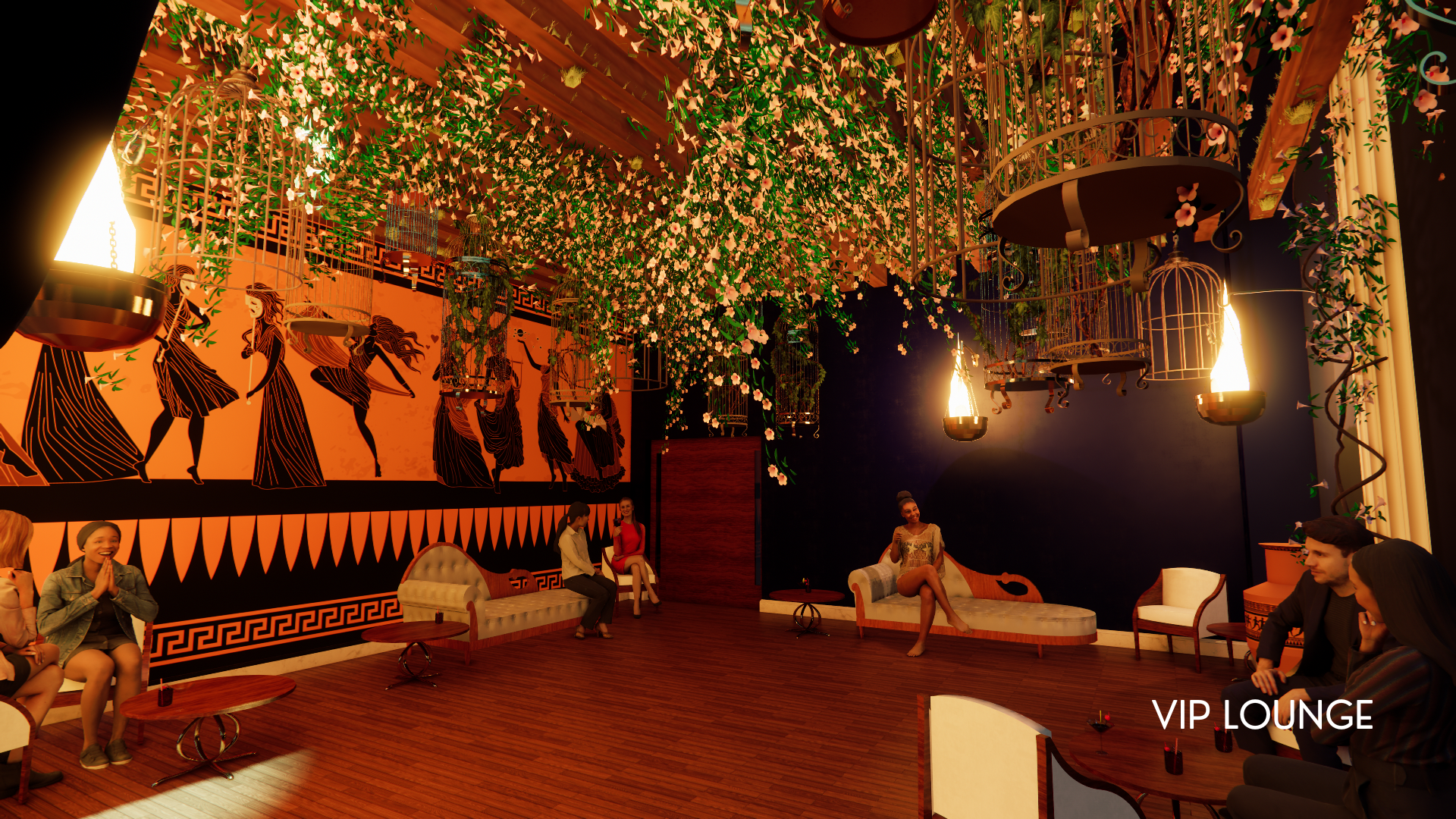
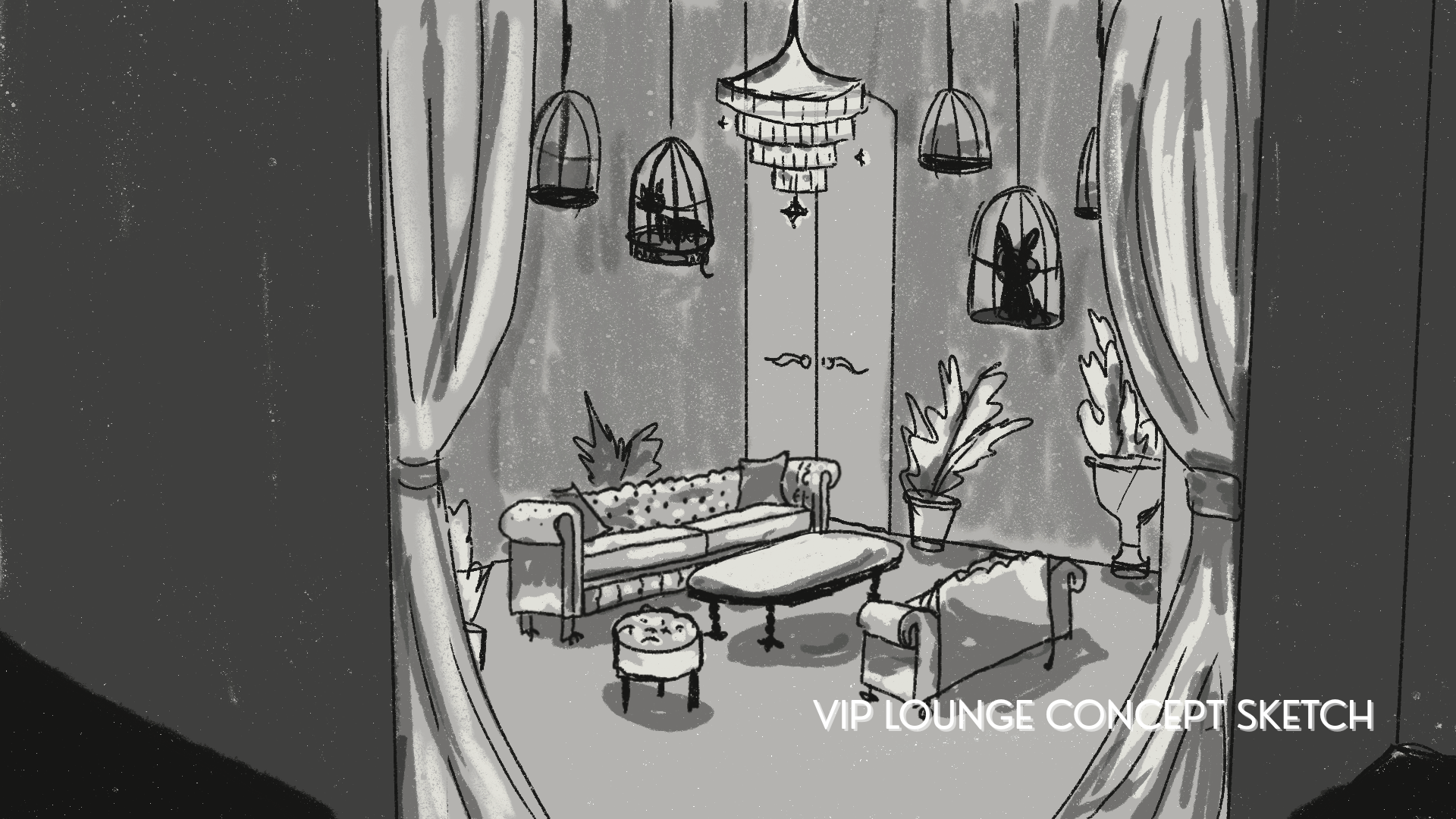
The VIP Lounge reveals Circe's nature through beautiful cruelty. Lush flowering vines cascade from wooden pergolas overhead, creating a garden canopy. But hanging among the blooms are gilded birdcages—some containing sculpted animals, others hauntingly empty.
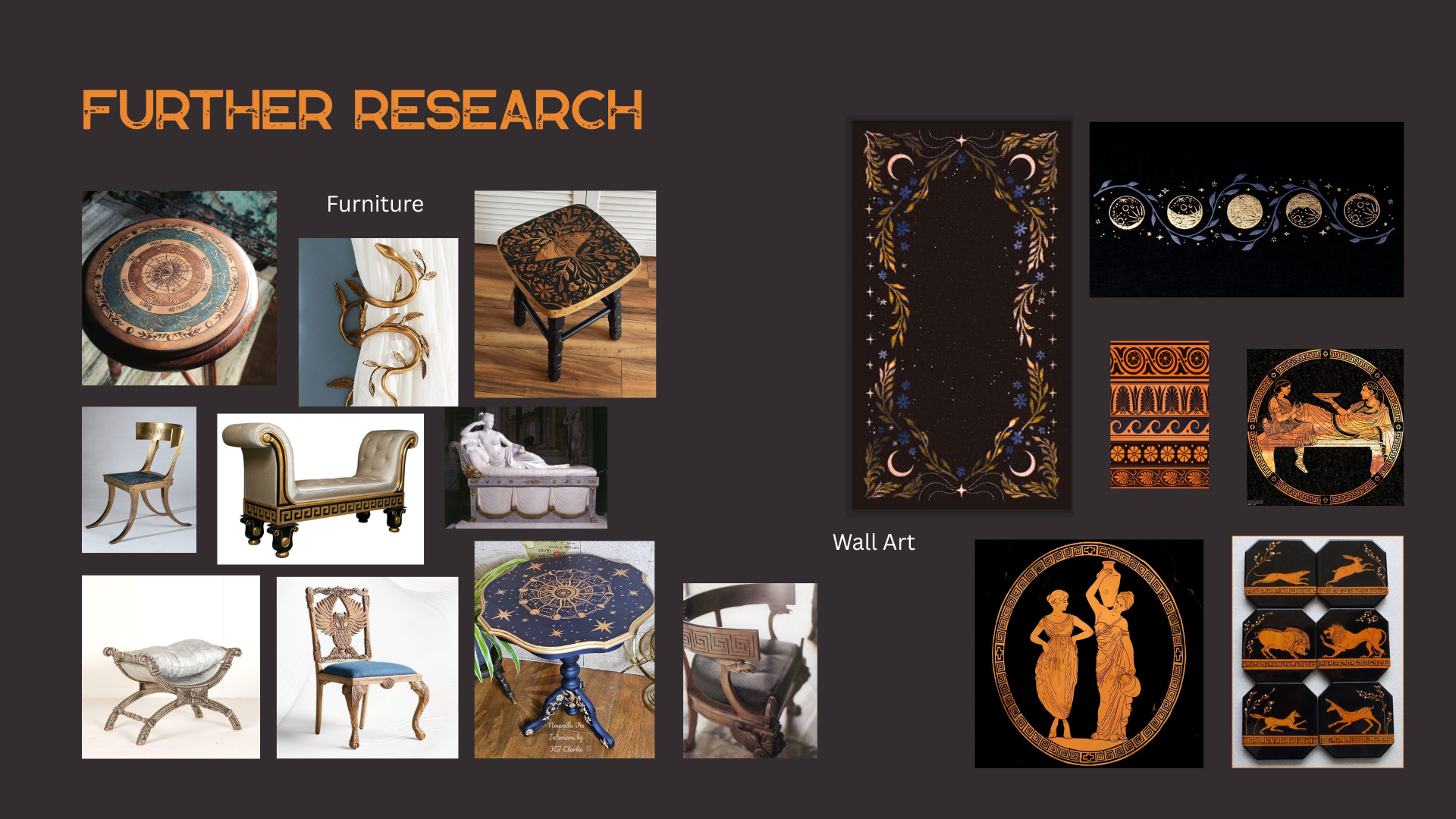
The seating is luxurious: tufted couches, ornate side tables, layers of texture and comfort. Wall murals show Greek figures in silhouette—dancing, celebrating, transformed into beasts mid-scene. The message is clear: luxury and danger coexist here.
This is where VIP guests feel special—chosen. But the cages whisper: chosen for what?
Corner Lounge
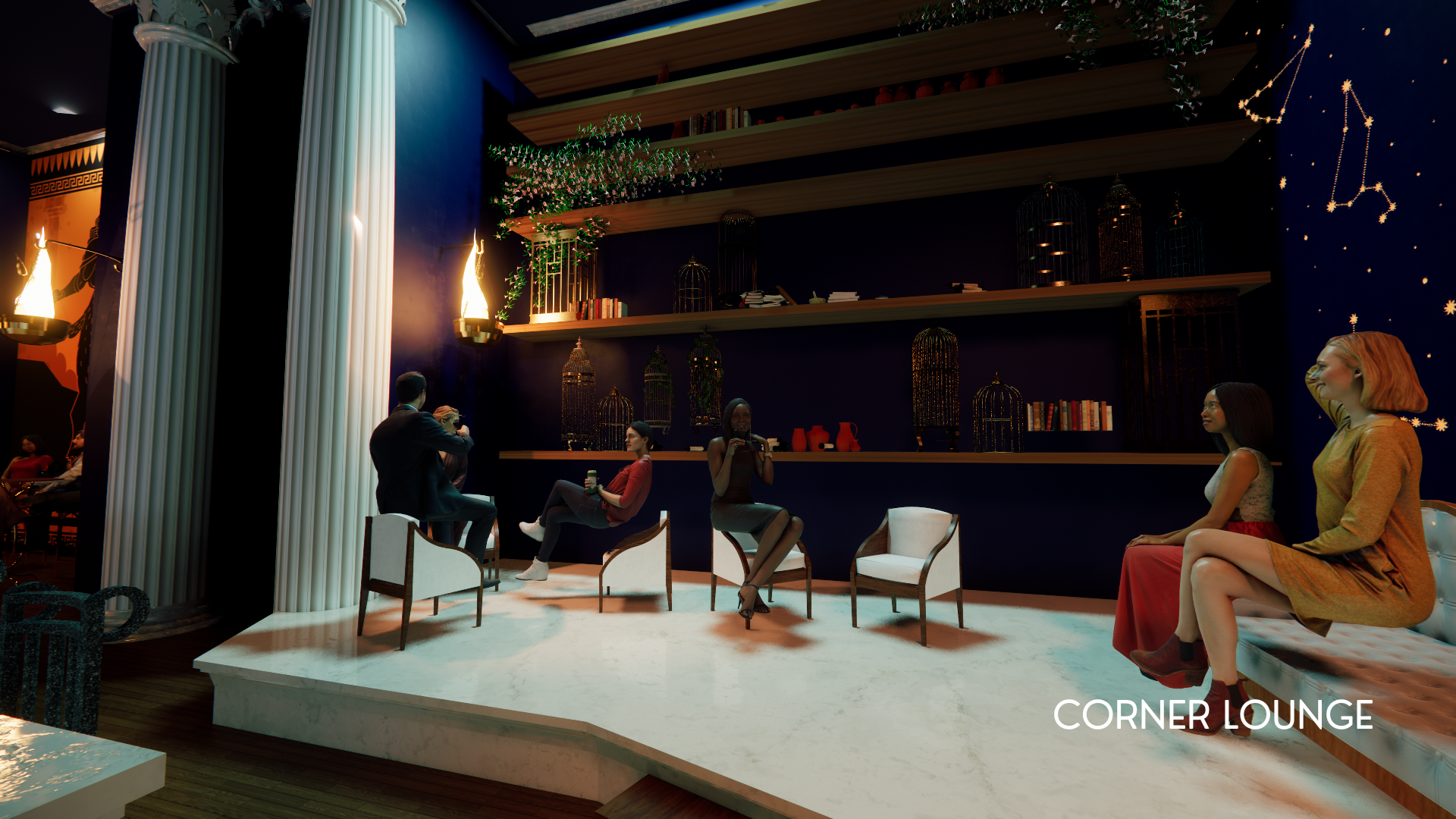
The Corner Lounge is where guests who explore discover the truth.
Floor-to-ceiling shelving dominates the space—minimalist wood shelves house specimen jars, caged creatures, ancient scrolls, and hanging herbs. Each cage carries a small nameplate. The seating, in its Hellenistic Revival style, is clustered to encourage quiet conversation. Warm firelight from wall sconces and glowing constellations on the walls create intimate pools of light, encouraging guests to sit close and speak quietly as they process what the nameplates mean.
This is environmental storytelling at its most unsettling—beautiful, historically detailed, and deeply wrong.
Specimen jars, scrolls, hanging herbs, and other relics of Circe's witchcraft
- Murals depicting women of Greek Mythology - stories and people Circe would like to depict in her home
- Greek pottery and amphorae displayed as artifacts
Reflection & Impact
What I Learned
Environmental Storytelling is Layered
The best narrative spaces work on multiple levels. Surface level: beautiful nightclub. Deeper investigation: ominous details (nameplates, cages). Full exploration: hidden sanctum reveals the truth. Guests choose their engagement depth.
Constraints Breed Creativity
Working within Greek architectural vocabulary forced creative problem-solving. How do you make a DJ booth feel ancient? How do you integrate a bar into a classical space? These constraints led to stronger, more cohesive design.
Rendering is Communication
As a solo project, photoreal rendering was essential—I had no team to pitch to, but the images needed to prove the concept could work. Learning to render lighting, materials, and atmosphere taught me how much mood drives themed entertainment.
Mythology Offers Emotional Shortcuts
Using a familiar myth (Circe) gave me narrative scaffolding—guests arrive with preconceptions about transformation, danger, and magic. I didn't need to explain the story; I just needed to evoke it through design.